Se afirma, por parte de algunos sectores políticos, que el llamado ‘castrochavismo’ es diferente a la democracia y al modelo económico vigentes en Colombia, cosa que es cierta, por lo que dizque tenemos que temerle. De ahí que se agite este tema en momentos coyunturales, como este periodos electoral. En esencia, quienes advierten esto aseguran que, supuestamente, las ideas básicas del modelo cubano y las del llamado Socialismo del siglo XXI están tomándose nuestro país, lo que según ellos sería el desastre.
La campaña «Mujeres por el desarme: más vidas, menos armas» busca crear conciencia tanto entre los responsables de hacer las leyes en el país como entre las organizaciones y movimientos sociales sobre el impacto que tiene la proliferación de armas de fuego en los derechos de las mujeres.
La ofensiva de la burguesía criolla en América Latina no ha dado los resultados que esperaba. Las clases dominantes han conseguido ciertos éxitos, pero en ningún caso se consolida su dominación y antes, por el contrario, solo nubarrones amenazan el poder de quienes desde la Colonia y hasta hoy han reinado sobre un mundo de desigualdades, opresión y violencia.
En Guatemala, luego de los acuerdos de paz, se extendió la agroindustria de cultivos como la palma aceitera. Algo similar puede pasar en Colombia. Foto: Omar Vera.
Por: Gearóid Ó Loingsigh – mayo 27 de 2017
Hace 21 años se firmó un acuerdo final entre la guerrilla de la Unidad Revolucionaria Nacional Guatemalteca (URNG) y el gobierno de Guatemala. Con este se puso fin a una larga sublevación armada contra la oligarquía guatemalteca que comenzó en los años 50 del siglo XX y que, no obstante el lapso de unos años, tuvo mucho que ver con el golpe de Estado que, en 1954, dio la CIA contra el gobierno de Jacobo Árbenz y su programa de reforma agraria. Así, no es sorprendente que el tema agrario fuera un tema clave en las negociaciones.
A pesar de las recomendaciones de la ONU, el Estado colombiano no ha actuado decididamente para afrontar la grave situación de derechos humanos que se vive en el país – Foto: Yovana Vargas.
Por: Christian Peñuela – 14 de febrero de 2017
269 organizaciones denunciaron ante el Comité de Derechos Humanos de la ONU la grave situación que se vive en Colombia, con ocasión del séptimo examen periódico universal realizado por dicho organismo del 17 al 20 de octubre en Ginebra (Suiza).
«Lo que la humanidad necesita es la revolución». Foto: Ernesto Che Mercado Jones.
Por: Juan Carlos Jaime Fajardo – agosto 24 de 2016
Es evidente que en Colombia está culminando un periodo de la revolución que había iniciado en la década de los años 60 del siglo pasado y que hoy asistimos a la apertura de uno nuevo.
Desde el pasado 16 de mayo, quienes trabajan en el servicio de alimentos en la mina de carbón de Pribbenow, operada por la Drummond en el municipio de El Paso (Cesar), se encuentran en asamblea permanente para protestar por las recargas laborales que padecen y por los constantes incumplimientos de acuerdos por parte de la empresa Compass Group.
El pasado 5 de febrero, más de 9.000 trabajadores de Territrios Saludables protestaron en la Plaza de Bolívar de Bogotá. Foto: Camila Ramírez.
Por: Camila Ramírez – marzo 9 de 2016
El recorte del programa Territorios Saludables, anunciado por el alcalde Enrique Peñalosa, ha disparado las protestas por parte de los pacientes y los más de 9.000 trabajadores de la salud que verían afectados sus empleos con la medida.
Para los trabajadores, el salario, el sueldo, la remuneración, nunca alcanza. Lo que ganamos apenas nos permite sobrevivir, mantenernos vivos para poder despertar un nuevo día a seguir entregando nuestro sudor en la fábrica, en la plantación, en la calle o en la oficina. Todo para que otros, una minoría, disfruten la vida a costa de nuestro trabajo.
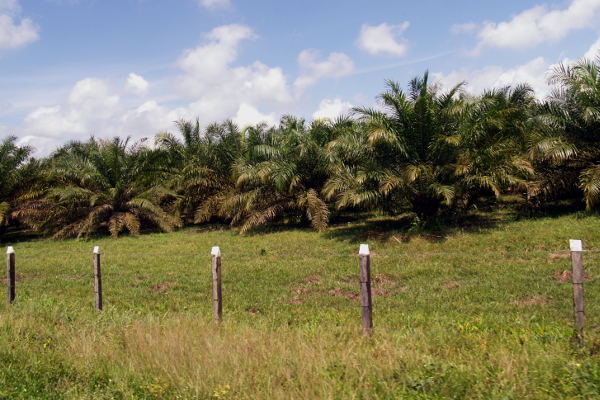
Among others, large agribusiness, as some palm oil producers, would benefit from the Zidres – Photo: Omar Vera.
By: Freddy Ordóñez Gomez – January 26, 2016
From the legal critique it argues that the discursive, normative constructions favor and reproduce capital and the social capitalist relation, a condition that is not perceived by simply reading the codes and laws, given that they are hidden beneath its supposed general nature, abstract and formalizing the law, as well as under the emphatic statement that it is neutral.
This favoritism accounts for what the legal sociologist Óscar Correas has called the ideological sense of entitlement, the likes of which is concealed and allows the reproduction of capital, for example, adding or excluding areas and subjects that are not found at the time, totally or partially, under the dynamic of capital accumulation.
The law has been fundamental to the expansion of capitalism and this has often been overlooked or minimized. Karl Marx, in Chapter XXIV of Capital accounts for how the issue or repeal of laws and decrees played an important role in primitive accumulation and the configuration of nascent British capitalism–the regulation about the enclosure of communal territory and the legislation about unpaid labor being celebrated–to the point that «the law itself becomes a vehicle of this depredation of the goods of the people.» The aforementioned is part of state power used in accordance with the expansion and intensification of capitalism. Thus, the peasants were deprived of their means of production, the land, and converted into the proletariat.
Today, the peasantry is still incorporated via regulations to the logic of capitalism. When this does not happen it becomes a nonexistent subject, another face in the legal discourse of exclusion and oppression, another of Enrique Dussel’s ‘denied’ and reminiscent of Antonio Carlos Wolkmer and Lucas Machado in their most recent work.
Under these premises, it can be noted that the draft law “for which the Zones of Interest for Rural, Economic and Social Development (Zidres) are created and developed” hides the social capitalist relation and, therefore, contains an ideological load akin to the same, and seeks to incorporate the peasantry into the dynamic of capital as a dominated subject.
According to the draft law (Article 1), the framework from which the Zidres are established is the formal economy and land management under criteria of full competitiveness, the projects to be implemented in these territories having to be suitable to these criteria and corresponding to the internationalization of the economy.
Here arise the first elements to consider: on one hand, other non-capitalist economies are excluded– such as peasant, Afro-Colombian, or indigenous economies– from the general approach, i.e. they will not be the ones to determine the projects, its development or prognosis, since the idea is that they become part of the business economy.
On the other hand, the internationalization of the economy allows land grabbing by foreign entities and for production to be guided by the global dynamic of food commercialization rather than the food needs of Colombians, given that it is only stipulated (Article 3, Paragraph 5) that in the approval of production projects within the Zidres that encompass domestic and foreign investment, it should guarantee that food security, autonomy and sovereignty is not affected.
Additionally, as part of the objectives of the new draft law, it will constitute and implement Agroindustrial Free Trade Zones that will capture new capital investments and promote competitiveness and profitability of industrial processes (Article 2).
Despite the clear orientation towards the global market and the satisfaction of private interests, Paragraph 2 stipulates that “the Zidres are considered to be of public utility and social interest”, a fallacy that can be found in other policy frameworks that benefit business sectors, such as Regulation 685 of 2001 or the Mining Code (Article 13).
However, the projects to be implemented in the Zidres do not necessarily need to include the rural population as an associate (Article 3), by which entrepreneurs can access lands for their business ventures under legal statutes, the ownership title belonging to the investor; this would contradict the objective of promoting «access and the formalization of the land ownership to the farmers, agricultural workers, rural women, rural youth and traditional occupants of real estate» (Article 2). Although, paradoxically, the standard also states that when initiatives include farmers, they can bring their main means of production, their land, without surrendering this property or letting it be acquired by the investor (Article 15). This leads to the conclusion that the provision of land for the rural population is a disposable objective.
That being so, the proposed regulation adopts a banner of agrarian capitalism of former President Álvaro Uribe: to deliver uncultivated lands to entrepreneurs rather than farmers. This can be deduced from Article 13, which states that the investor may request from the Government «the granting of concession, by leasing or any other type of unfigurative territorial contract, of the real estate of the Nation located in the Zidres» without the existence of legal limitations on extension or time of the concession, which renews the essence of the Carimagua model of the previous government.
Additionally, Paragraph 1 of Article 13 seeks shelter under the Zidres for those employers who, contrary to legal stipulations, accumulated national uncultivated lands, destined by Regulation 160 of 1994 to small farmers and to the formation of peasant reserve areas. It would be facing a similar scenario described by Karl Marx: the plundering of public lands on a gigantic scale.
It is worth noting that, within the legal proposal, recurrent and repeated reference is made to technology transfer, the provision of technological packages and technical training to farmers, showing that those who constructed the articles considered peasants as backward, and see capitalist agribusiness and rural entrepreneurship as development and progress. These are the proposals of the failed Green Revolution and the thesis of the improvement of non-capitalist societies and their economic structures for the full deployment of capitalism, in clear disregard of–among others– the condition of the variegated society of our country.
Finally, we should highlight two redundancies of the legal concept that the project contains. First, it provides that in cases of modification of the agricultural legislation and sectoral taxation, investors retain the rights acquired according to the law in effect at the time of signing the agreements or contracts (Article 8). This protection presents itself at times in which different sectors agree on the need to reformulate aspects related to taxes paid by rural lands and when they will necessarily present modifications in the sector as a result of the signing of agreements in Havana between the national government and the FARC-EP.
Furthermore, the Zidres, to benefit from the consideration of public utility and social interest, prevail over other figures of non-capitalist land management, such as indigenous reserves and peasant reserve areas, which take precedence over the latter figure only when they are formally recognized by Incoder, as indeed it stated in Article 29. Only for collective territories of black communities is the impossibility of the legal concept established when these are «in the process of certification.» A similar situation occurs in areas of environmental importance in which the legal concept could not be implemented only when they are «declared and defined.»
From ethical political or legal considerations, the draft law on Zidres should be rejected by the social movement on grounds of opposing land rights and the rights of peasants. It amounts to a setback in relation to the stipulations of Regulation 160 of 1994–which would be partially repealed as being contrary to the new law–which contradicts the constitutional jurisprudence and the Constitution. Likewise, it also favors large estates and inequality in land tenure and perpetuates rural poverty.
Nevertheless, factors must also be identified that relate to the dynamics of capitalist accumulation to which the project aims, since they are the incorporation of territories within the geography of the capital, the cloak of legality that will provide forms of looting of public property– irregular accumulation of uncultivated lands– the promotion of the dissociation between the farmer and his property, the imposition of the economy and the capitalist territoriality of non-capitalist forms and the denial of these territories and their subjects, the continuity of the concept of the’ backward’ peasantry and competition as the guiding principle of society and the economy, and the introduction of private investment as a synonym for progress, public utility, welfare and social interest, just to mention some aspects of what the draft law of Zidres conceals from us and therefore obliges us to reject.
________
* Researcher at the Latin American Institute for an Alternative Society and Law (ILSA). Translated by: Liesl Drew.