Etiqueta: Café Bigotes

  • The solidarity that sustains Pereira

    The solidarity that sustains Pereira

    By: Andrés Gómez
    Photography: Pilar Angarita

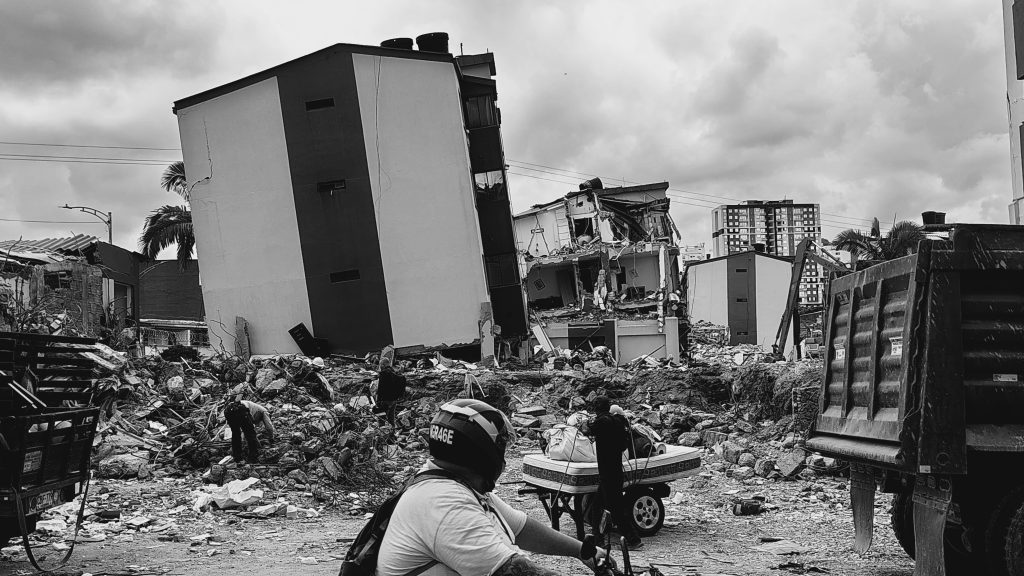
    Pereira was one the cities hardest hit by the earthquake that struck Colombia on August 10. The quake left more than a hundred people dead or missing and thousands more displaced in the city. Today, those who lost their homes and can’t find another place to live are staying in temporary shelters or in parks, while unemployment has risen alongside rent prices.

    Amid the precarity and uncertainty, networks of solidarity have sprung into action to help the earthquake’s victims. In search of collective and personal responses to the tragedy, El Turbión and CESJUL traveled to Pereira in mid-August with the support of Global Exchange. We found how dozens of people fed hundreds, distributed food packages, and used art to heal the trauma of a city that will need sustained support to rebuild.

    Art That Heals

    With “emergency pedagogy,” Aitar works through the trauma the earthquake has caused for dozens of children living in shelters in Pereira

    The mayor’s office of Pereira reported 35,263 homes affected: 9,200 with structural damage, 10,124 with severe damage, in addition to 66 completely collapsed buildings, 34 health centers, and 165 schools. The sheer number of untenable homes and schools has resulted in hundreds of children living in shelters, where they are crowded together with their parents and other families. According to press estimates, 1,500 people went from living in an apartment or house to living in a tent within a shelter. This situation is already difficult enough for families, let alone when they have to share the space with hundreds of people.

    Aware of the trauma left by the earthquake and these upheavals, Agitart has begun to volunteer in what’s called “emergency pedagogy” with children. We found them in the Parque del Oso en Pereira and observed how the organization, made up mostly of young women, created spaces for the children to express their emotions, with the goal of helping them through the crucial phase that follows any deeply traumatic event. They work to find tools within the children and their communities that support, heal, ad offer physically and emotionally safe environments.


    We, like Agitart, are working so that children can grow up safer.


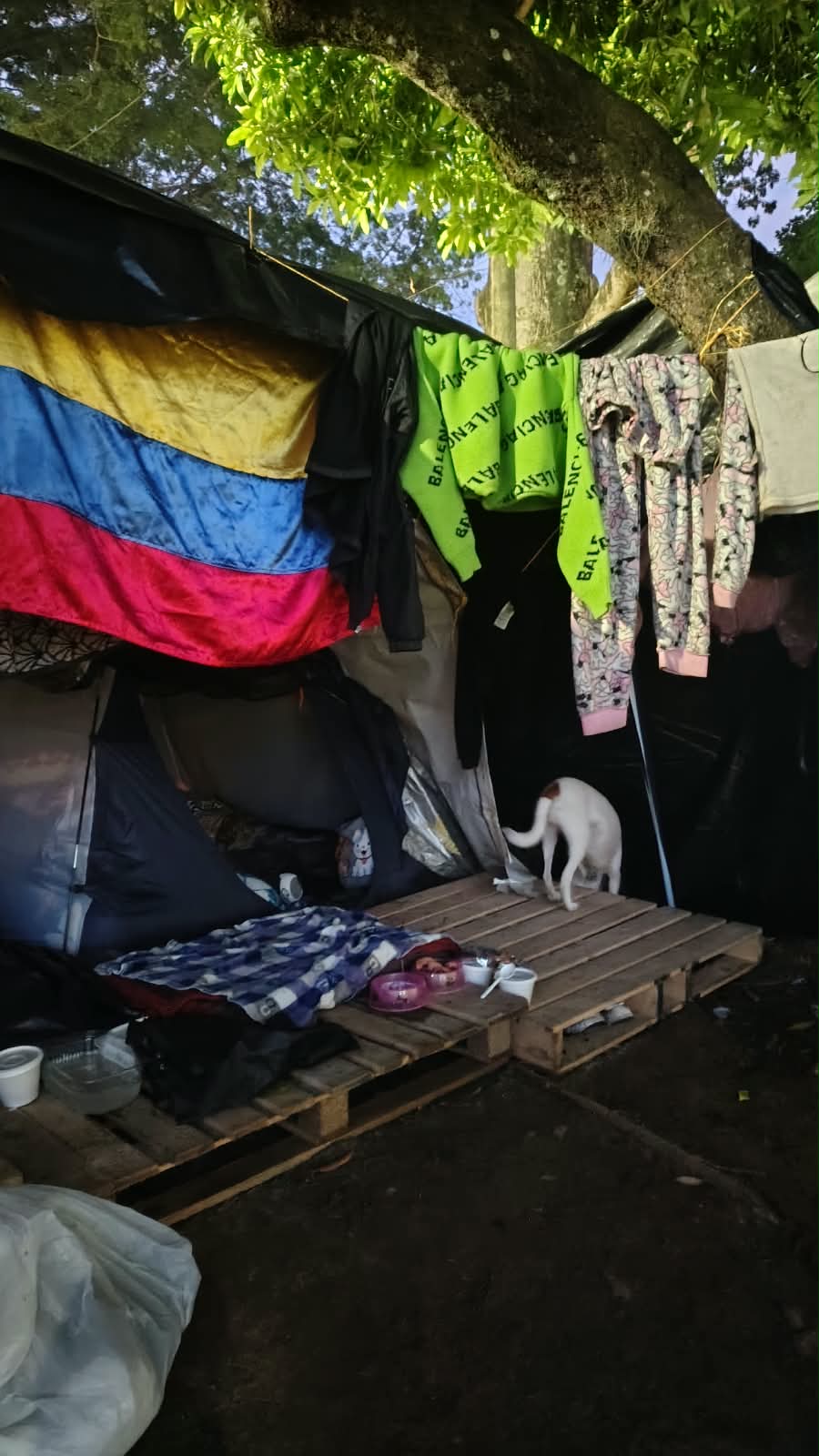
    Agitart’s work isn’t easy. The people receiving state assistance are living in improvised shelters in the El Vergel Ecopark, Parque El Oso, Parque Olaya, the Balalcázar sports complex, and Plazoleta Risaralda. The Coliseo Mayor and the Mora Mora Stadium have already reached capacity, and Parque de la Libertad had to be evacuated because nearby buildings were at risk of collapse.

    In the Face of Hunger, Solidarity

    Hunger is real in Pereira and in the other hardest-hit cities. The UN World Food Programme (WFP) has requested 23 million dollars to provide three months of food assistance to more than 100,000 people affected across Colombia. Even so, the aid doesn’t reach everyone, least of all women who are heads of household. In addition, there are complaints about access to aid and a lack of transparency in how the aid is allocated.

    Faced with this reality, the ecofeminist collective Las Weras, founded in the aftermath of the pandemic, has been cooking and distributing food to victims since August 10 with its “rebel pot.”

    Las Weras preparing food packages for women heads of household affected by the earthquake

    Today they are helping a hundred women, including pregnant and breastfeeding women, who lost their houses, family members, jobs or networks of care. While for now they are responding to victims by cooking and distributing food packages, Las Weras know of the new needs coming in the immediate future, which include psychological support, help finding work, the strengthening entrepreneurship for the women they serve, and the prevention of gender-based violence.

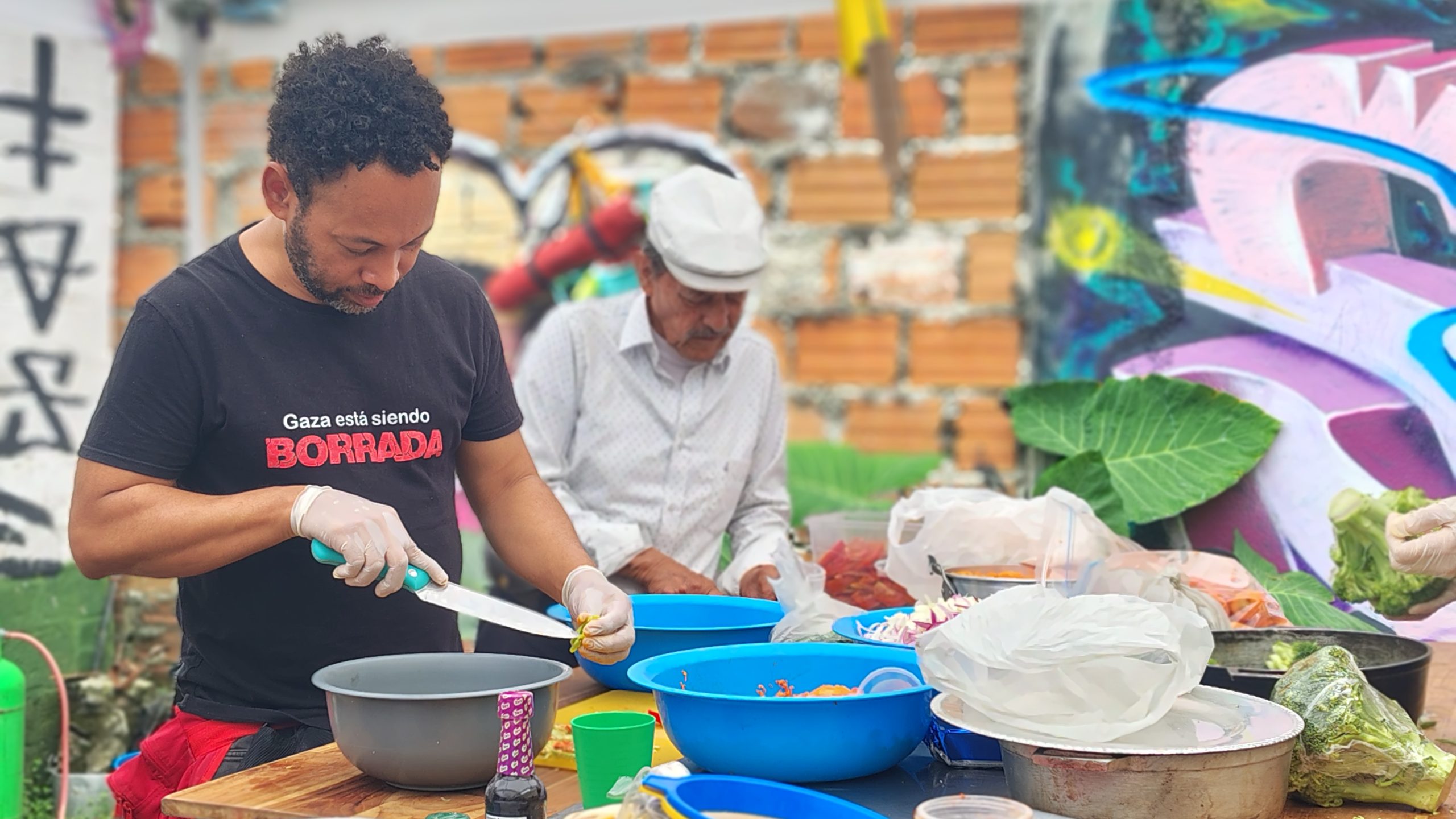
    Another initiative feeding hundreds of people who are not in shelters but cannot cook or buy food is the community kitchen created by el Museo Intangible (The Intangible Museum) during the 2021 uprising, which the collective reactivated the very night of the earthquake. The Museum, together with Las Weras and other collectives, joined forces in the Parque Olaya for several days. Today, it operates in the Open House, a cultural collective in downtown Pereira that opened its doors to attend to the emergency.

    The Intangible Museum has created a space of care through food at Open House

    There they cook and distribute food to neighborhoods including San Nicolás, La Libertad, Corocito, Las Margaritas, Villa Santa Ana, and Villavicencio. Dozens of volunteers who turned up spontaneously prepare the food, but keeping the stove lit is difficult because aid diminishes every day. They also know that hunger and unemployment won’t change any time soon. As they put it:

    People are hungry. They won’t have housing for a long time. They won’t have a job for a long time. The city isn’t going to be rebuilt this year.

    Protecting the Animals

    Mario Betancourt with his canine family

    Mario Betancourt is a resident of Pereira, migrant who has returned from the United States, street vendor, and caretaker of five dogs he has rescued since 2021. He used to sell T-shirts, but he can’t anymore because many of the streets are still at risk of collapse. On top of that, the roof of his house caved in, and he is now among the displaced.

    His daughters, as he calls his dogs, are called Celeste, Julieta, la Niña, la Negra, and Canela. All five are playful, their coats shining in the sun, alert to whatever Mario says as they run free in the park. Mario doesn’t know how to support his family of five rescued dogs, and the uncertainty weighs on him:

    This is only the beginning. The economy has come to a halt and I live off what I sell in the street.

    In response, he opened an Instagram account to sell his goods and keep caring for the family he chose to build.

    Mario isn’t the only one struggling to support rescued animals. Ricardo Cardona is the owner of Cafe Bigotes, the first mission-driven cat café in Colombia’s coffee region, Eje Cafetero. It’s a cage-free place that, in its owners words, has rescued “more than 1,500 animals” and has found homes for 482 cats.

    The earthquake took the café’s physical structure, but not its cats. Ricardo pulled nearly all of them from the rubble, and amid the aftershocks, only one cat is still missing; he leaves food out for her. Neighbors have spotted her while guarding their properties against looters looking for opportunity in the debris.

    Ricardo Cardona, owner of Cafe Bigotes

    Today Ricardo needs a house with space that’s comfortable for the cats, where he can set up his only source of income: a café. The money that Café Bigotes brings in is all that sustains his work with the animals.
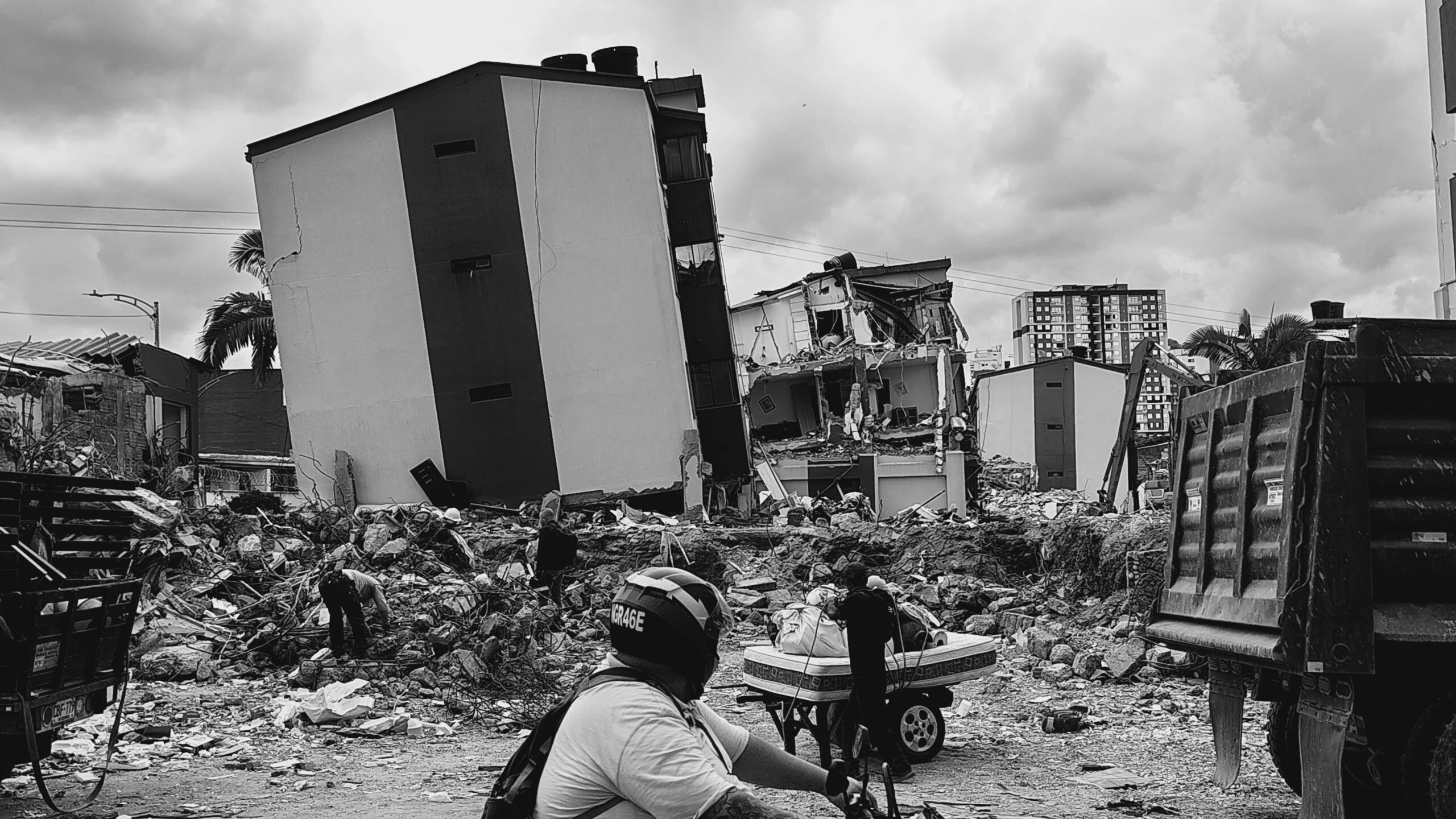
    Ricardo Cardona in front of what remains of his Café Bigotes

    Volunteering has its limits and costs for the people responding to this humanitarian emergency. Sustaining this work over time is only possible with solidarity and support from elsewhere. There is no reconstruction without solidarity for those providing support. Las Weras and the Intangible Museum are already doing their part to cook and provide food packages for hundreds of people. So is Agitart, in seeking to heal trauma through art, and so are Mario and Ricardo, in continuing to care for these animals they have chosen to protect.

    The response from the city government and the department of Risaralda, and from Albelardo de la Espriella, have been denounced as insufficient and violent by several people we interviewed.

    Violence as a Response to the Tragedy


    In Pereira, the official statistics date from August 19 and come from the “Unified Command Post” of the mayor’s office. Since then, that data has stood as the official toll: 99 dead, 132 missing, and 259 injured. What’s certain is that we’ll never know how many people might have been saved or found. Abelardo de La Esriella’s decision to bar the entry of specialized search teams from countries not aligned with the far right delayed operations by three days, costing lives in every affected city.
    Adding to that incomprehensible decision was the cruelty of ordering the rubble cleared and the cities’ economies restarted less than a week after the disaster.

    For those who lived through the earthquake, these decisions were emotionally devastating. They witnessed potentially injured people go unrescued, and instead, be treated like rubble after August 14. So says María Cristina López Bolívar, a professor at the Universidad Technológica de Pereira (UTP), who saw places – where everyone knew people and bodies lay buried – turn into empty lots overnight. What happened to the bodies?

    De La Espriella failed to grasp that an earthquake leaves both individual and collective trauma, and starkly violated the right to rescue and to mourn. In other countries that have suffered similar disasters (Venezuela, for instance) rescue teams spent weeks unearthing cadavers so that they could be sent home, helping to close the wound for those affected families and for society as a whole.


    Beyond that, thousands of people who depended on businesses located on destroyed properties or on the informal economy lost their livelihoods. Hunger and unemployment add to the uncertainty, and the response, once again, has been violent. It shows how displaced people will be treated. In Pereira, between September 2 and 3, 30 families displaced by the earthquake who had been eating from a communal pot were evicted by the Dialogue and Order Maintenance Unit (UNDMO), accused of invading public space.

    This is a politics that places violence above life. While more than 367 of Colombia’s 1,100 municipalities wait for aid and support to begin rebuilding, Abelardo de La Espriella has revived a policy of aerial bombing that has already killed several children. He has walked among corpses reveling in his “iron first” campaign against criminal organizations.

    Rebuilding the affected cities and towns is a social process that demands solidarity, memory, and justice. To rebuild is not to clear the rubble and raise buildings; rather to guarantee dignified mourning and respond with empathy to the people and their needs. Rebuilding is a matter of the highest importance for Colombia, and will only be possible if it’s built transparently, alongside the people affected, and obviously with a real commitment to the lives and the dignity of those who lost everything.


    In recognition of El Turbión’s commitment to integrity and excellence in journalism, the outlet has obtained the Certification of the Journalism Trust Initiative, promoted by Reporters Without Borders under the international standard CEN CWA 17493:2019.

    Independent journalism and investigation are costly… Support us.

  • La solidaridad que sostiene a Pereira después del terremoto

    La solidaridad que sostiene a Pereira después del terremoto

    Por: Andrés Gómez, Fotografía: Pilar Angarita

    Pereira fue una de las ciudades que resultó más golpeadas por el terremoto que afectó a Colombia el pasado 10 de agosto. Ese día, el sismo ocasionó más de un centenar de muertos y desaparecidos, y ha dejado a miles de personas damnificadas en la ciudad. Hoy, quienes perdieron su casa y no pueden procurarse un lugar donde vivir habitan albergues temporales o parques y el desempleo aumentó, igual que el precio de los arriendos. 

    En medio de la precariedad y la incertidumbre, se activaron redes de solidaridad hacia las víctimas del terremoto. En busca de las respuestas de colectivos y personas a la tragedia, El Turbión y CESJUL visitamos Pereira a mediados de agosto, con el apoyo de la organización Global Exchange y encontramos cómo decenas de personas alimentan a cientos, reparten mercados y sanan con arte el trauma social de una ciudad que necesitará un apoyo permanente para reconstruirse.

    Arte para sanar

    Con pedagogía de emergencia Agitart trabaja el trauma que el terremoto ha causado en decenas de niños en albergues en Pereira

    La Alcaldía de Pereira reportó 35.263 viviendas afectadas: 9.200 con afectación estructural, 10.124 con daño severo, además de 66 edificaciones completamente colapsadas, 34 centros de salud y 165 instituciones educativas afectadas. La cantidad de viviendas y colegios deshabilitados ha causado que cientos de niñas y niños estén viviendo en albergues, donde están hacinados junto con sus padres y otras familias. Según estimados de prensa, 1.500 personas pasaron de vivir en un apartamento o casa a habitar una carpa en albergues. Esta situación ya es difícil en familia y lo es cuando se comparte el espacio con cientos de personas.

    Conscientes del trauma del terremoto y los cambios, Agitart ha empezado a trabajar desde el voluntariado en algo que llaman “pedagogía de emergencia” con niñas y niños. Los encontramos en el Parque del Oso, en Pereira, y observamos cómo la organización, compuesta en su mayoría por mujeres jóvenes, facilita espacios para que niñas y niños expresen sus emociones, con el objetivo de actuar en una fase crucial luego de un hecho tan traumático y buscar herramientas desde los propios niños y comunidades para acompañarse, sanarse, y ofrecer entornos de seguridad física y emocional.

    Nosotros, como Agitart, estamos trabajando para que los niños crezcan más seguros, afirman.

    La actividad de Agitart es un reto. Las personas atendidas por el Estado habitan albergues improvisados en el Ecoparque El Vergel, el Parque El Oso, el Parque Olaya, el Polideportivo Belalcázar y la Plazoleta Risaralda. El Coliseo Mayor y el Estadio Mora Mora ya alcanzaron su límite de aforo, y el Parque de la Libertad tuvo que ser evacuado por riesgo de colapso de edificaciones cercanas.

    Ante el hambre, la solidaridad


    El hambre es algo real en Pereira y las ciudades más afectadas. Por ello, el Programa Mundial de Alimentos (PMA) de la ONU pidió 23 millones de dólares para proporcionar asistencia alimentaria por tres meses a las más de 100.000 personas afectadas en toda Colombia. Sin embargo, no es suficiente, se denuncian problemas de acceso y falta de transparencia en la asignación de ayudas. 

    Ante esta realidad, la colectiva “Las Weras”, organización ecofeminista que nació en la post-pandemia, está cocinando y distribuyendo alimentos para las damnificadas desde el 10 de agosto con su “olla rebelda”.

    Las Weras preparando mercados para las mujeres cabeza de familia afectadas por el terremoto
    Las Weras preparando mercados para las mujeres cabeza de familia afectadas por el terremoto

    Hoy acompañan a cien mujeres que perdieron su casa, familiares, su empleo o su red de cuidado, así como a mujeres gestantes y lactantes. Y, si bien por ahora dan respuesta a las damnificadas cocinando y repartiendo mercados, Las Weras saben de las necesidades, en el inmediato futuro, que incluyen acompañamiento psicosocial, la búsqueda de empleo, el fortalecimiento de emprendimientos para las mujeres que atienden, y la prevención de violencias basadas en género.

    Otra iniciativa que atiende el hambre de cientos de personas que no están en albergues, pero que no pueden cocinar o comprar comida, es el comedor que creó el Museo Intangible la misma noche del terremoto. El Museo, junto con Las Weras y otros colectivos, se juntó en el Parque Olaya por varios días, pero hoy funciona en Casa Abierta, un colectivo cultural en el centro de Pereira que abrió sus puertas para seguir atendiendo la emergencia.

    El Museo Intangible ha creado un espacio de cuidado a través de la comida en Casa Abierta
    El Museo Intangible ha creado un espacio de cuidado a través de la comida en Casa Abierta

    Allí cocinan y reparten comida a barrios como San Nicolás, La Libertad, Corocito, Las Margaritas, Villa Santa Ana y Villavicencio. Los alimentos los preparan decenas de manos de voluntarios(as) que se suman de manera espontánea, pero sostener el fogón es difícil porque cada día disminuyen las ayudas. También saben que la situación de hambre y desempleo no cambiará a corto plazo. Por ello, advierten:

    La gente tiene hambre, no va a tener casa por mucho tiempo, no va a tener trabajo por mucho tiempo. La ciudad no se va a reconstruir este año.

    Los animales también necesitan quienes los protejan 

    Mario Betancourt con su familia perruna
    Mario Betancourt con su familia perruna

    Mario Betancourt es residente de Pereira, migrante retornado de los Estados Unidos, vendedor ambulante y cuidador de cinco perritas que ha rescatado desde 2021. Vendía camisetas, pero ya no puede hacerlo porque muchas de las calles todavía están en peligro de colapsar. Además, el techo de su casa se cayó y hoy está damnificado.

    Sus hijas, como él llama a sus perras, se llaman Celeste, Julieta, la Niña, la Negra y Canela. Todas son juguetonas y su pelo brilla al sol, al tiempo que están atentas a lo que Mario diga cuando corren libres por el parque. Mario hoy no sabe cómo sostener a su familia de cinco perras rescatadas, y lo presiona la incertidumbre: 

    Apenas está empezando, la economía se frenó y yo vivo de lo que vendo en la calle.

    Como respuesta, abrió un Instagram para vender y así continuar con el cuidado de la familia que decidió formar.

    Mario no es el único que tiene problemas para mantener animales rescatados. Ricardo Cardona es el propietario de Café Bigotes, el primer café para gatos con sentido social del Eje Cafetero. Un lugar que estaba libre de jaulas y que, en palabras de su dueño, ha rescatado “más de 1.500 animales” y ha dado en adopción a 482 gatos.

    El terremoto se llevó la estructura física del café, pero no a sus gatos. Ricardo sacó a casi todos de entre los escombros y, en medio de las réplicas, solo le falta una gata, a la que le deja comida. Los vecinos la han visto cuando hacen guardia para salvar sus propiedades de los ladrones que buscan oportunidad entre los escombros. 

    Hoy Ricardo necesita una casa con espacio, cómoda para los gatos, donde también pueda instalar su única fuente de ingresos: un café. Con los recursos que ofrece el café, sostiene todo el trabajo de apoyo a los animales.

    Ricardo Cardona ante lo que queda de su Café Bigotes

    El voluntariado tiene sus límites y costos para las personas que atienden la emergencia humanitaria, continuar este trabajo en el tiempo solo puede hacerse con el apoyo solidario desde otros lugares. No hay reconstrucción sin solidaridad con quienes apoyan. Las Weras y el Museo Intangible ya están haciendo su parte al cocinar para cientos de personas y proveerles mercados. También Agitart, al buscar sanar el trauma con arte, e igualmente Mario y Ricardo, al seguir cuidando los animales que han decidido proteger.

    La respuesta Gubernamental de la ciudad y del departamento de Risaralda, y del ahora presidente de Colombia de extrema derecha Abelardo de la Espriella, denuncian algunas de las personas entrevistadas, ha sido insuficiente y violenta.  

    Una respuesta violenta a la tragedia

    En Pereira, las estadísticas oficiales disponibles son del 19 de agosto y provienen del “Puesto de Mando Unificado” de la Alcaldía. Desde entonces, ese dato es el saldo oficial: 99 fallecidos, 132 desaparecidos y 259 heridos. Lo cierto es que no se sabrá cuántas personas pudieron salvarse o ser encontradas. La decisión de Abelardo de La Espriella de no permitir el ingreso de equipos de búsqueda especializados provenientes de países no alineados con la ultraderecha, retrasó tres días de labores, lo que costó la vida de varias personas en todas las ciudades afectadas. 

    A esta incomprensible decisión, se le sumó la crueldad de ordenar levantar los escombros y activar la economía de las ciudades a menos de una semana de la tragedia.

    Para las personas que vivieron el terremoto, estas decisiones fueron emocionalmente desoladoras. Fueron testigos de personas potencialmente heridas que no se rescataron, y que fueron tratadas como escombros luego del 14 de agosto. Así lo afirma María Cristina López Bolívar, docente de la Universidad Tecnológica de Pereira (UTP), quien presenció cómo, en lugares donde sabían que estaban personas y cuerpos enterrados, de la noche a la mañana solo quedaron espacios vacíos ¿Qué pasó con los cuerpos?

    De La Espriella no entendió que un terremoto deja traumas individuales y colectivos, y vulnera de forma tajante el derecho al rescate y al duelo. En otros países donde se han sufrido tragedias similares, como en Venezuela, los grupos de rescate tardaron semanas desenterrando cadáveres para entregarlos a familiares y ayudar, de esta manera, a cerrar el trauma de las personas y de la sociedad.

    Además, miles de personas que dependían de negocios en predios destruidos o de la economía informal perdieron sus fuentes de ingreso. El hambre y el desempleo acompañan la incertidumbre, y la respuesta, de nuevo, es violenta y muestra cómo serán tratadas las personas damnificadas. En Pereira, del 2 al 3 de septiembre pasados, 30 familias damnificadas del terremoto que comían de una olla comunitaria fueron desalojadas por el Escuadrón Móvil Antidisturbios – ESMAD,  acusadas de invadir el espacio público.

    El Gobierno de Abelardo de la Espriella ha reactivado una política de bombardeos que ya deja varios niños y niñas muertos, y caminó entre cadáveres recocijándose de su política de “mano dura” contra organizaciones criminales, mientras más de 367 municipios de los 1.100 que tiene Colombia, esperan ayudas y el apoyo para iniciar su reconstrucción.

    Ante la incapacidad de aceptar más gente en los albergues de Pereira, muchas personas han terminado viviendo en las calles en condiciones precarias

    La reconstrucción es un proceso social que demanda solidaridad, memoria y justicia. Reconstruir no es recoger escombros y levantar edificios, sino garantizar duelos dignos y responder con empatía a las personas y sus necesidades. La reconstrucción es un asunto de la mayor importancia para Colombia y solo será posible si se construye con transparencia, con las personas afectadas, y obviamente con un compromiso real con la vida y la dignidad de quienes lo perdieron todo. Sin solidaridad 


    En reconocimiento al compromiso del equipo de El Turbión con la integridad y la excelencia en el periodismo, el medio ha obtenido la Certificación de la Iniciativa de Periodismo Confiable, promovida por Reporteros sin Fronteras con la norma internacional CEN CWA 17493:2019.