
By: Andrés Gómez
Photography: Pilar Angarita
Translated by: Clark Gudas
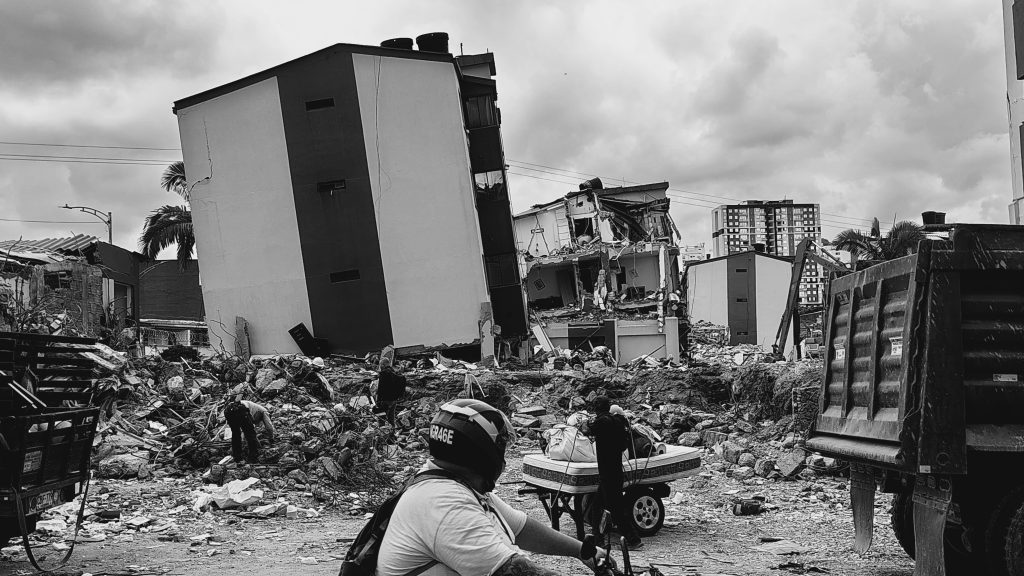
Pereira was one the cities hardest hit by the earthquake that struck Colombia on August 10. The quake left more than a hundred people dead or missing and thousands more displaced in the city. Today, those who lost their homes and can’t find another place to live are staying in temporary shelters or in parks, while unemployment has risen alongside rent prices.
Amid the precarity and uncertainty, networks of solidarity have sprung into action to help the earthquake’s victims. In search of collective and personal responses to the tragedy, El Turbión and CESJUL traveled to Pereira in mid-August with the support of Global Exchange. We found how dozens of people fed hundreds, distributed food packages, and used art to heal the trauma of a city that will need sustained support to rebuild.
Art That Heals
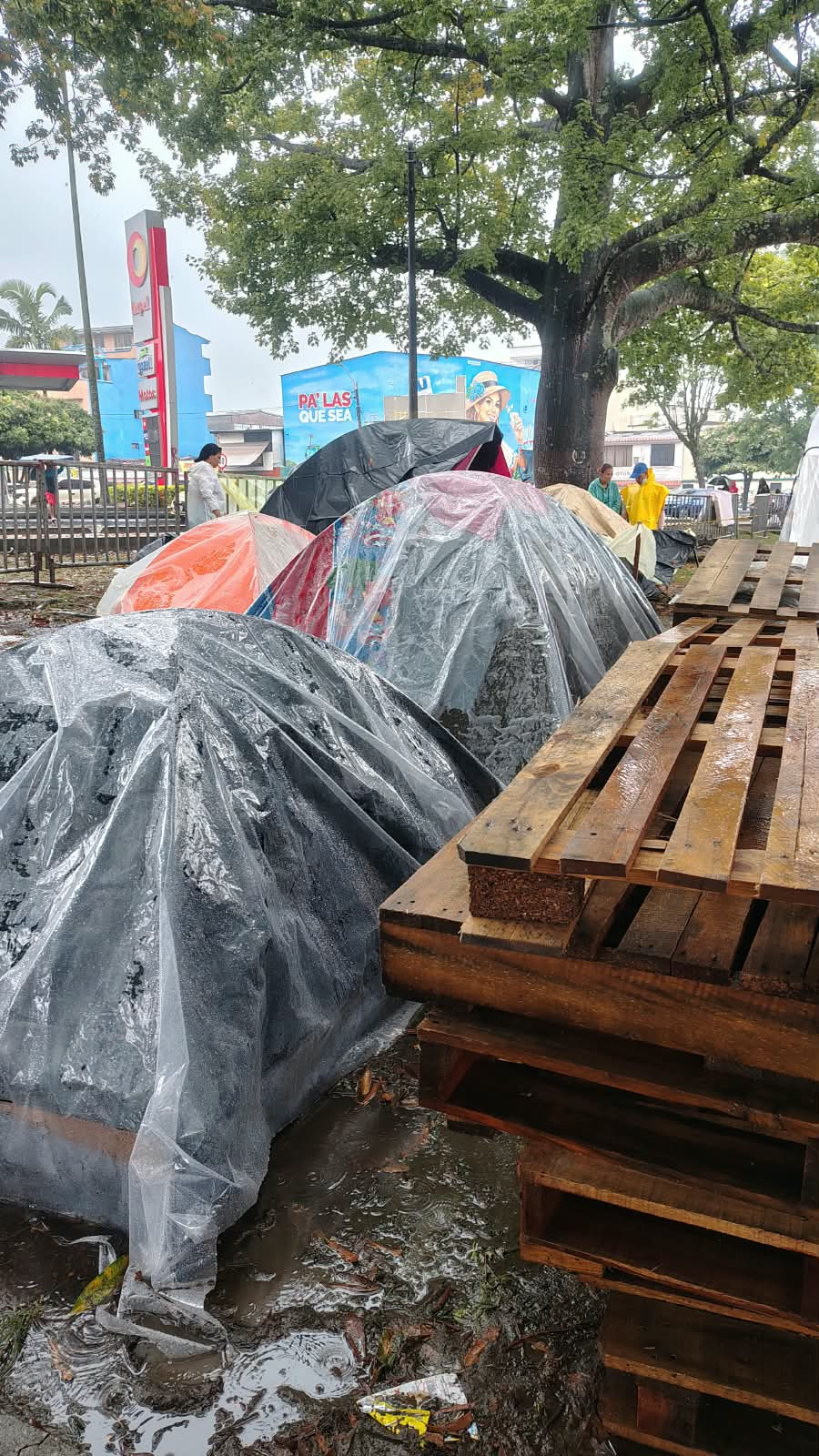
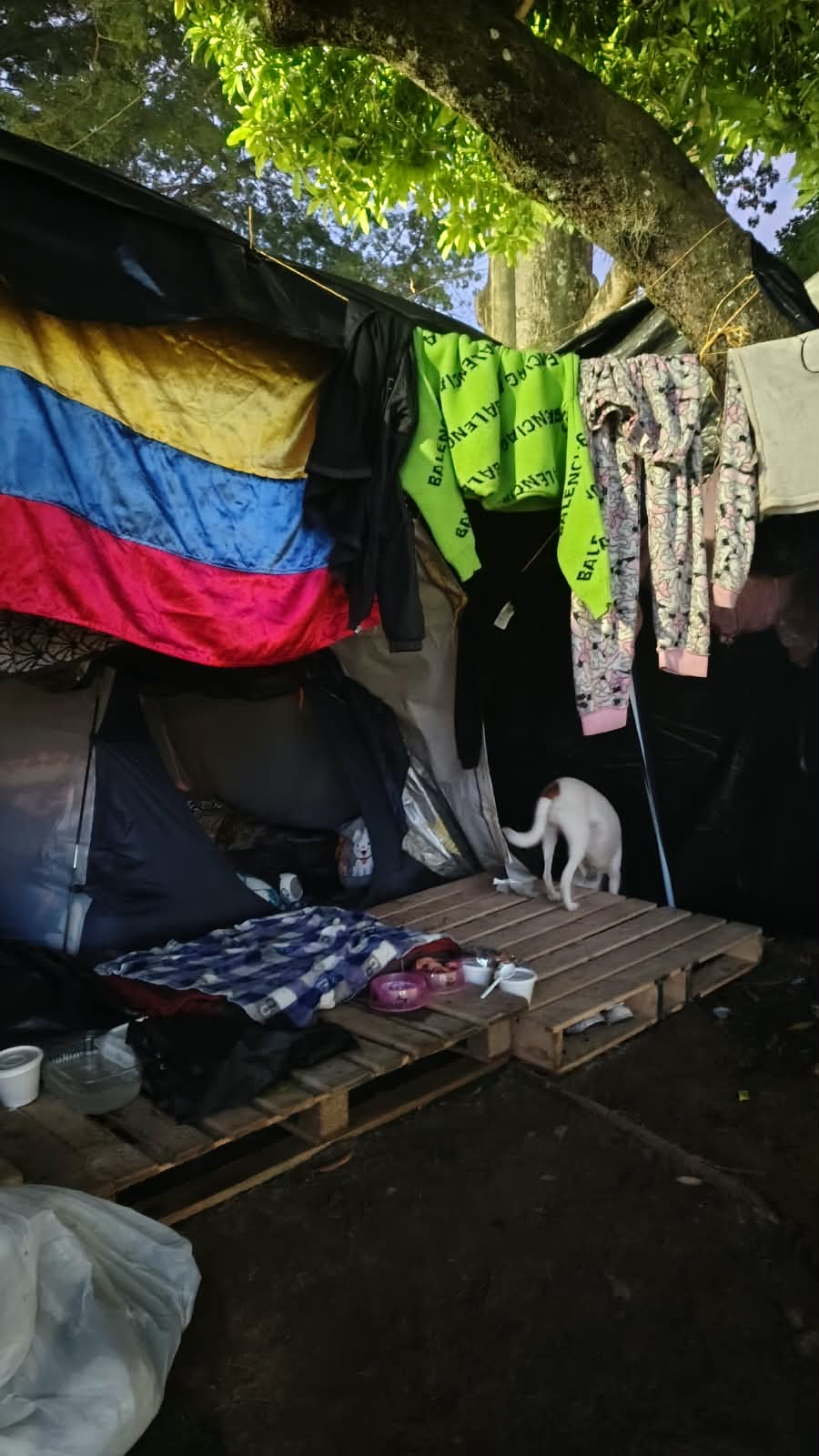
The mayor’s office of Pereira reported 35,263 homes affected: 9,200 with structural damage, 10,124 with severe damage, in addition to 66 completely collapsed buildings, 34 health centers, and 165 schools. The sheer number of untenable homes and schools has resulted in hundreds of children living in shelters, where they are crowded together with their parents and other families. According to press estimates, 1,500 people went from living in an apartment or house to living in a tent within a shelter. This situation is already difficult enough for families, let alone when they have to share the space with hundreds of people.
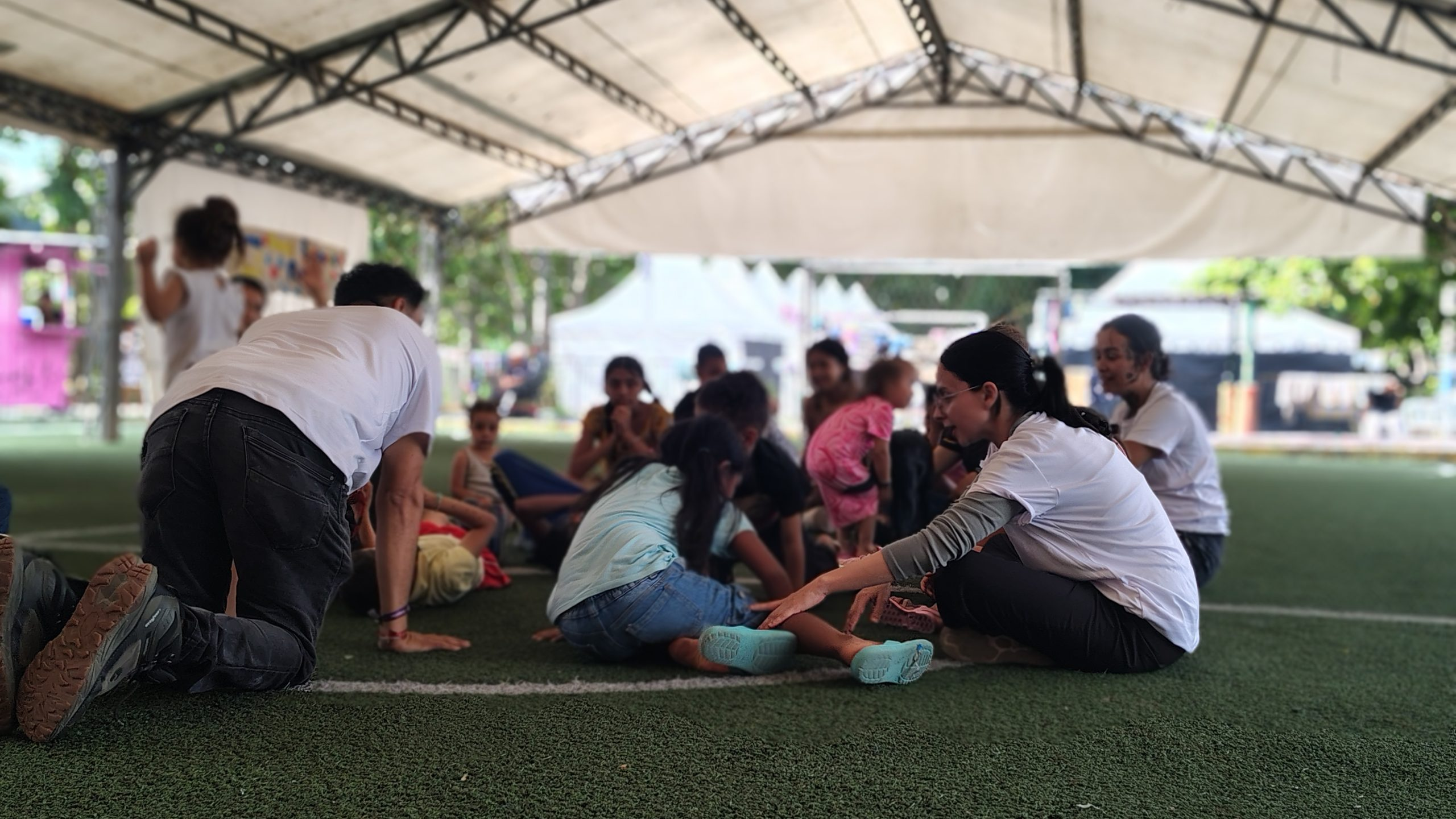
Aware of the trauma left by the earthquake and these upheavals, Agitart has begun to volunteer in what’s called “emergency pedagogy” with children. We found them in the Parque del Oso en Pereira and observed how the organization, made up mostly of young women, created spaces for the children to express their emotions, with the goal of helping them through the crucial phase that follows any deeply traumatic event. They work to find tools within the children and their communities that support, heal, and offer physically and emotionally safe environments.
We, like Agitart, are working so that children can grow up safer.
Agitart’s work isn’t easy. The people receiving state assistance are living in improvised shelters in the El Vergel Ecopark, Parque El Oso, Parque Olaya, the Balalcázar sports complex, and Plazoleta Risaralda. The Coliseo Mayor and the Mora Mora Stadium have already reached capacity, and Parque de la Libertad had to be evacuated because nearby buildings were at risk of collapse.
In the Face of Hunger, Solidarity
Hunger is real in Pereira and in the other hardest-hit cities. The UN World Food Programme (WFP) has requested 23 million dollars to provide three months of food assistance to more than 100,000 people affected across Colombia. Even so, the aid doesn’t reach everyone, least of all women who are heads of household. In addition, there are complaints about access to aid and a lack of transparency in how the aid is allocated.
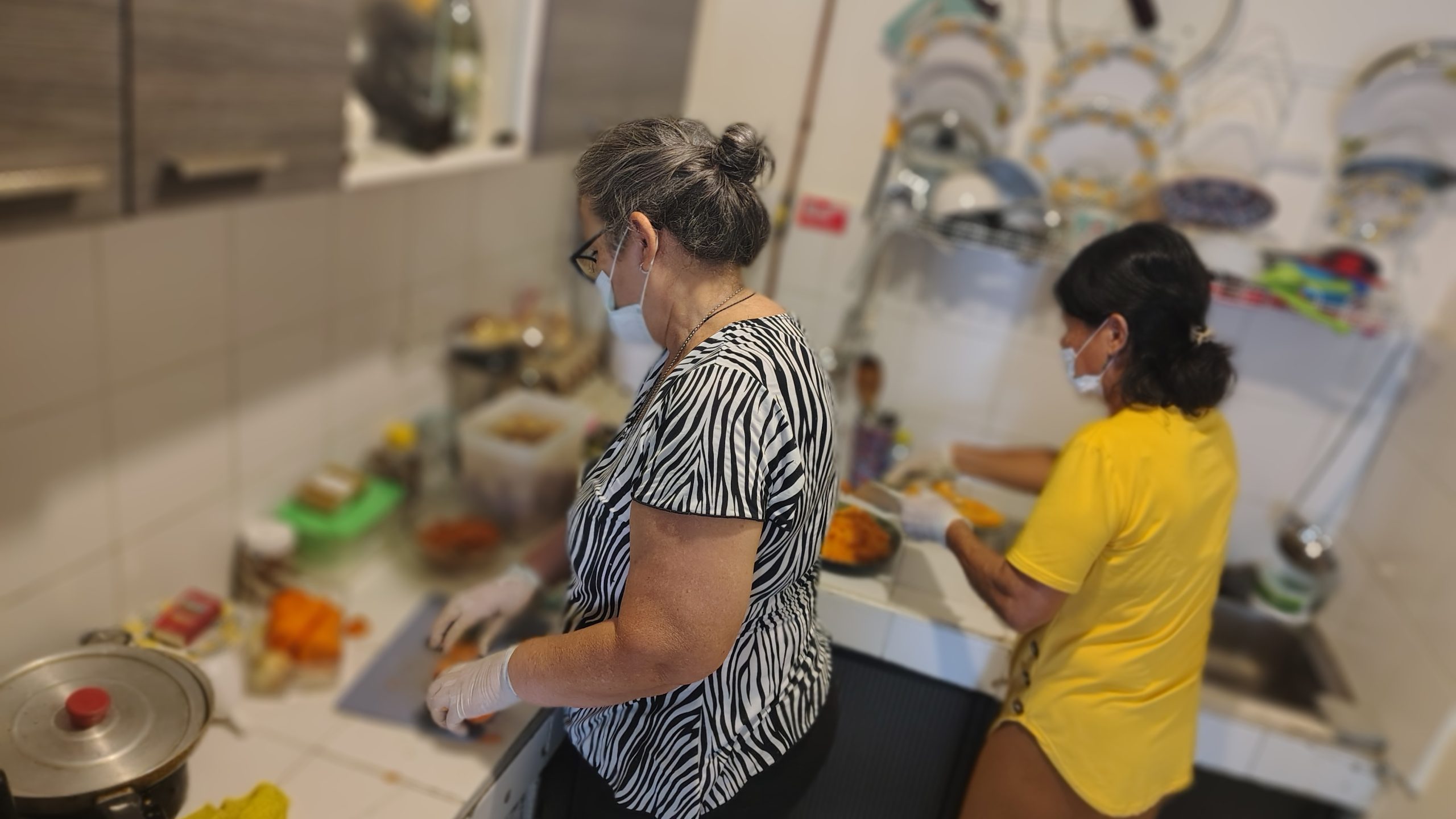
Faced with this reality, the ecofeminist collective Las Weras, founded in the aftermath of the pandemic, has been cooking and distributing food to victims since August 10 with its “rebel pot.”
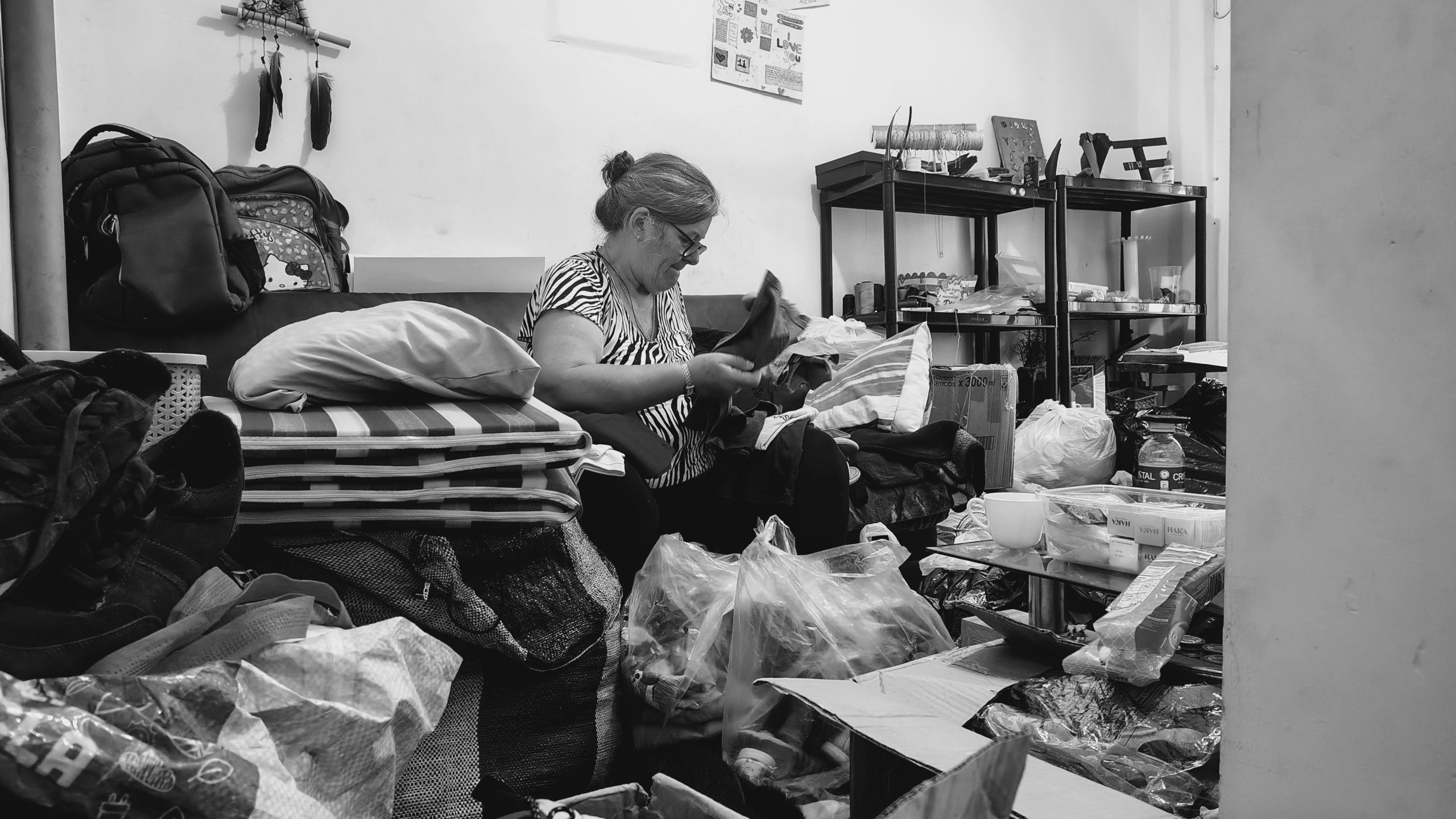
Today they are helping a hundred women, including pregnant and breastfeeding women, who lost their houses, family members, jobs or networks of care. While for now they are responding to victims by cooking and distributing food packages, Las Weras know of the new needs coming in the immediate future, which include psychological support, help finding work, the strengthening entrepreneurship for the women they serve, and the prevention of gender-based violence.
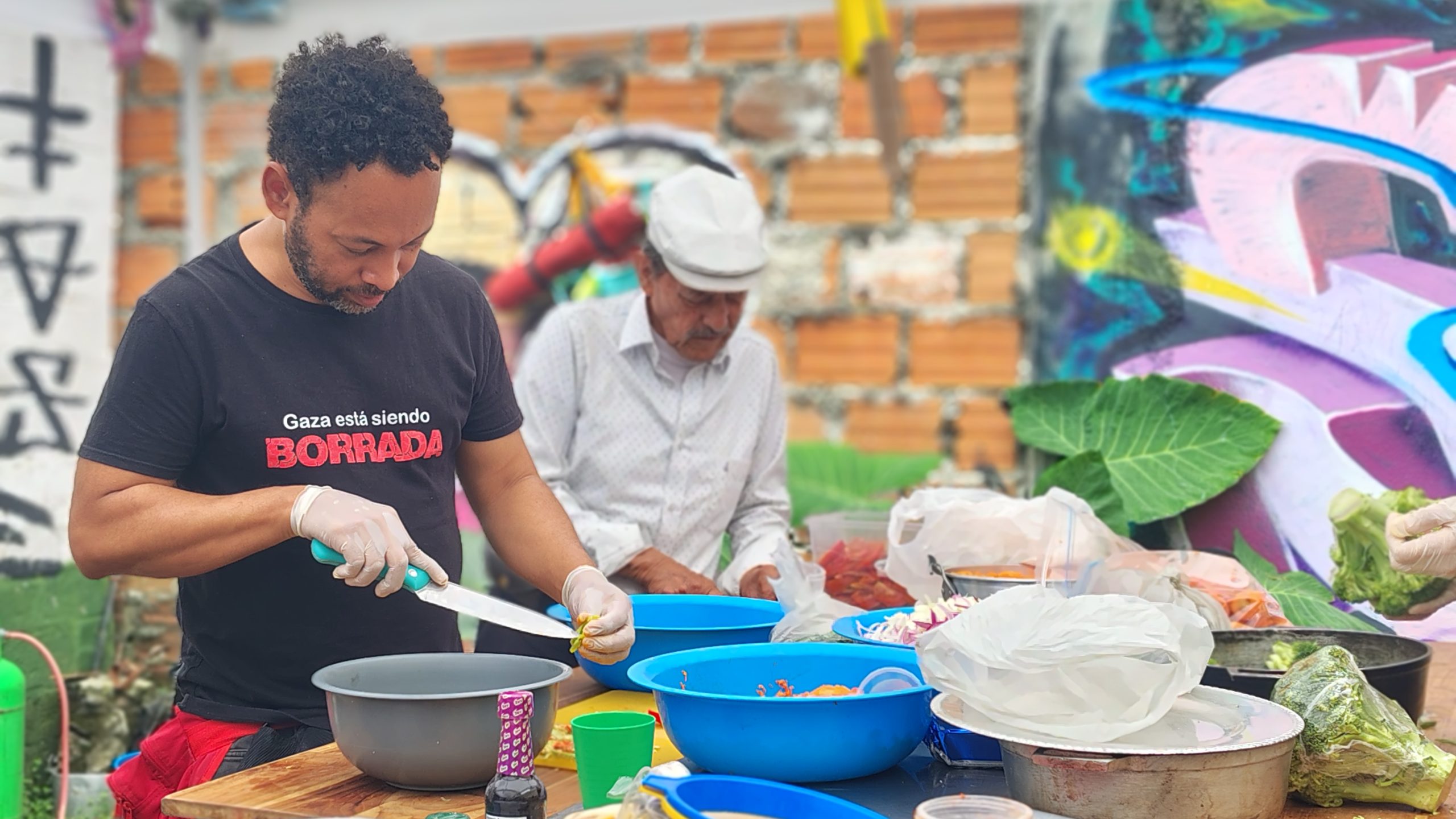
Another initiative feeding hundreds of people who are not in shelters but cannot cook or buy food is the community kitchen created by el Museo Intangible (The Intangible Museum) during the 2021 uprising, which the collective reactivated the very night of the earthquake. The Museum, together with Las Weras and other collectives, joined forces in the Parque Olaya for several days. Today, it operates in Casa Abierta (Open House), a cultural collective in downtown Pereira that opened its doors to attend to the emergency.
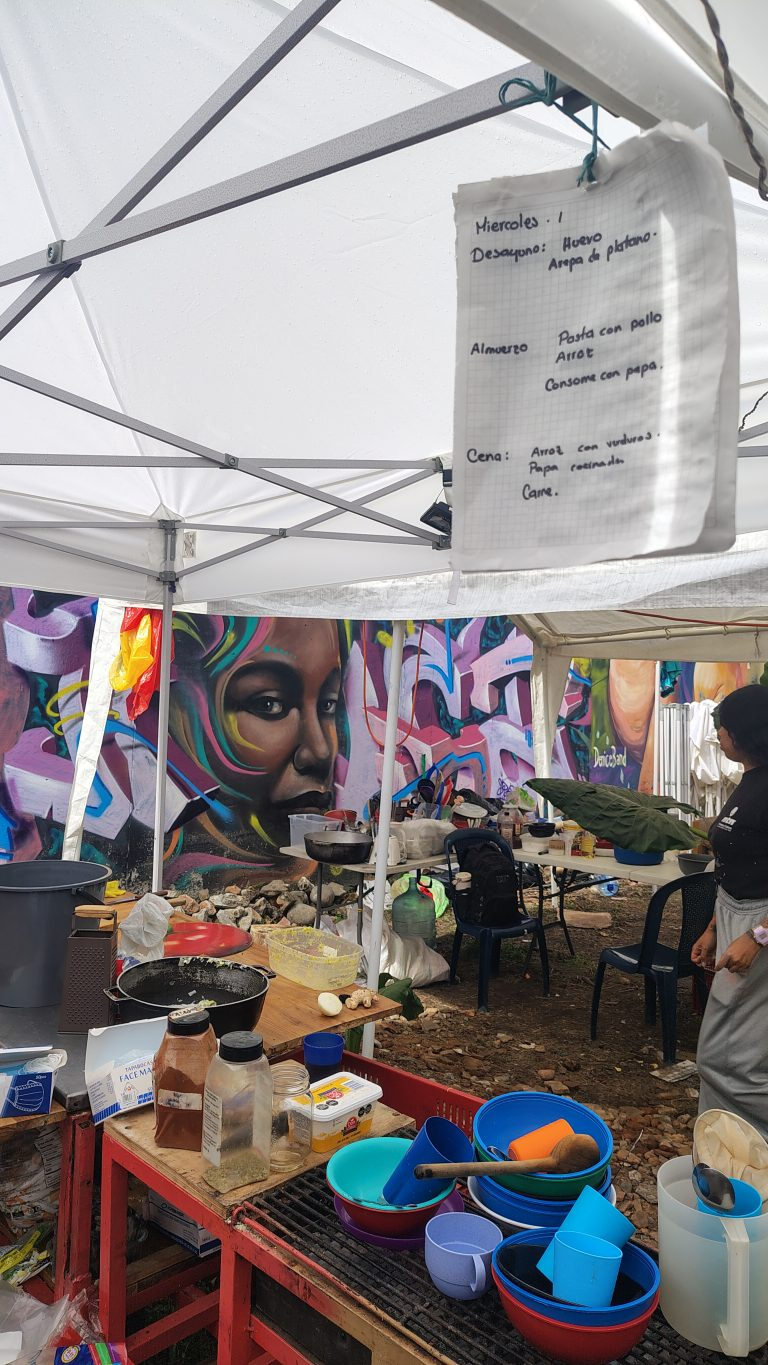
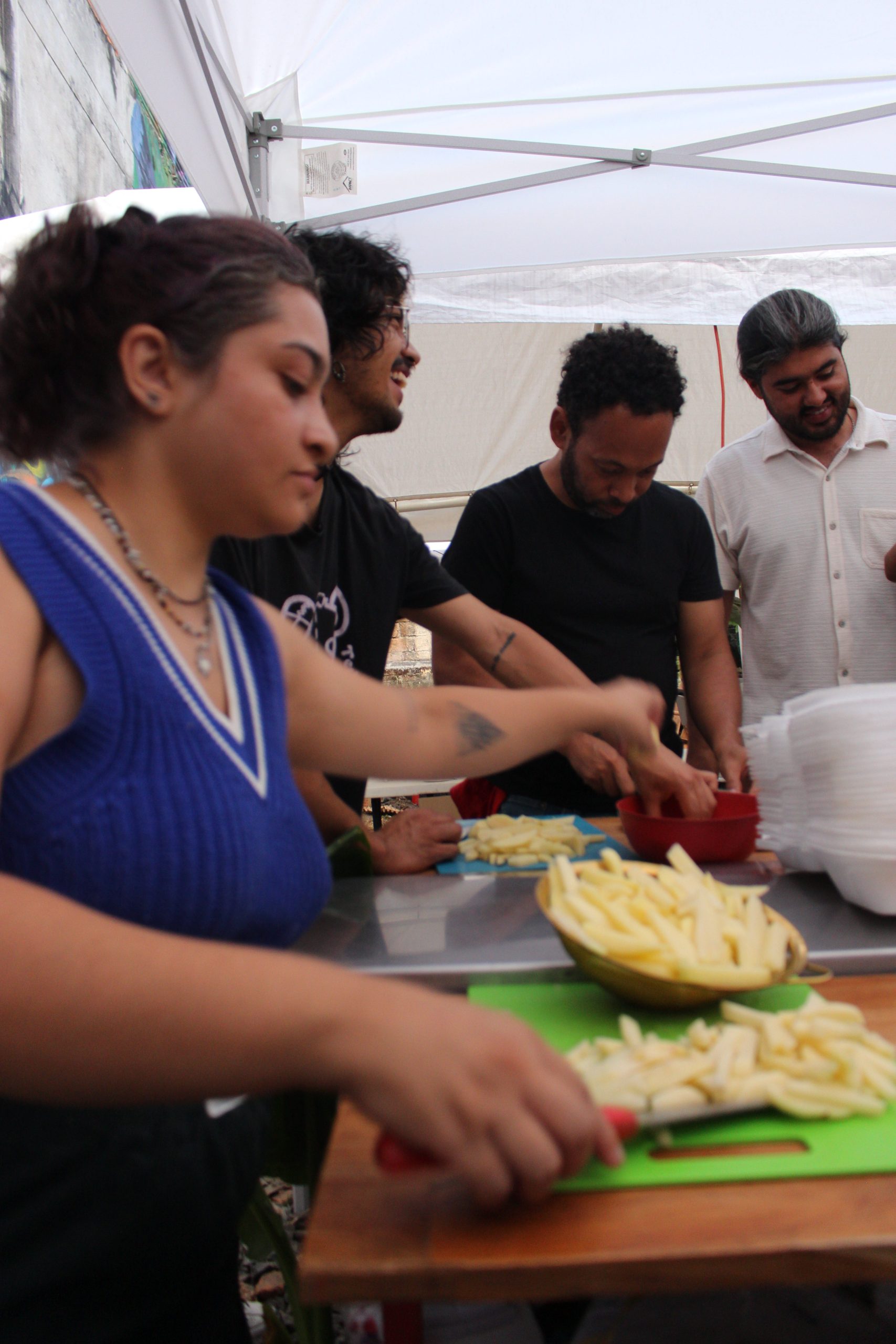
There they cook and distribute food to neighborhoods including San Nicolás, La Libertad, Corocito, Las Margaritas, Villa Santa Ana, and Villavicencio. Dozens of volunteers who turned up spontaneously prepare the food, but keeping the stove lit is difficult because aid diminishes every day. They also know that hunger and unemployment won’t change any time soon. As they put it:
People are hungry. They won’t have housing for a long time. They won’t have a job for a long time. The city isn’t going to be rebuilt this year.
Protecting the Animals
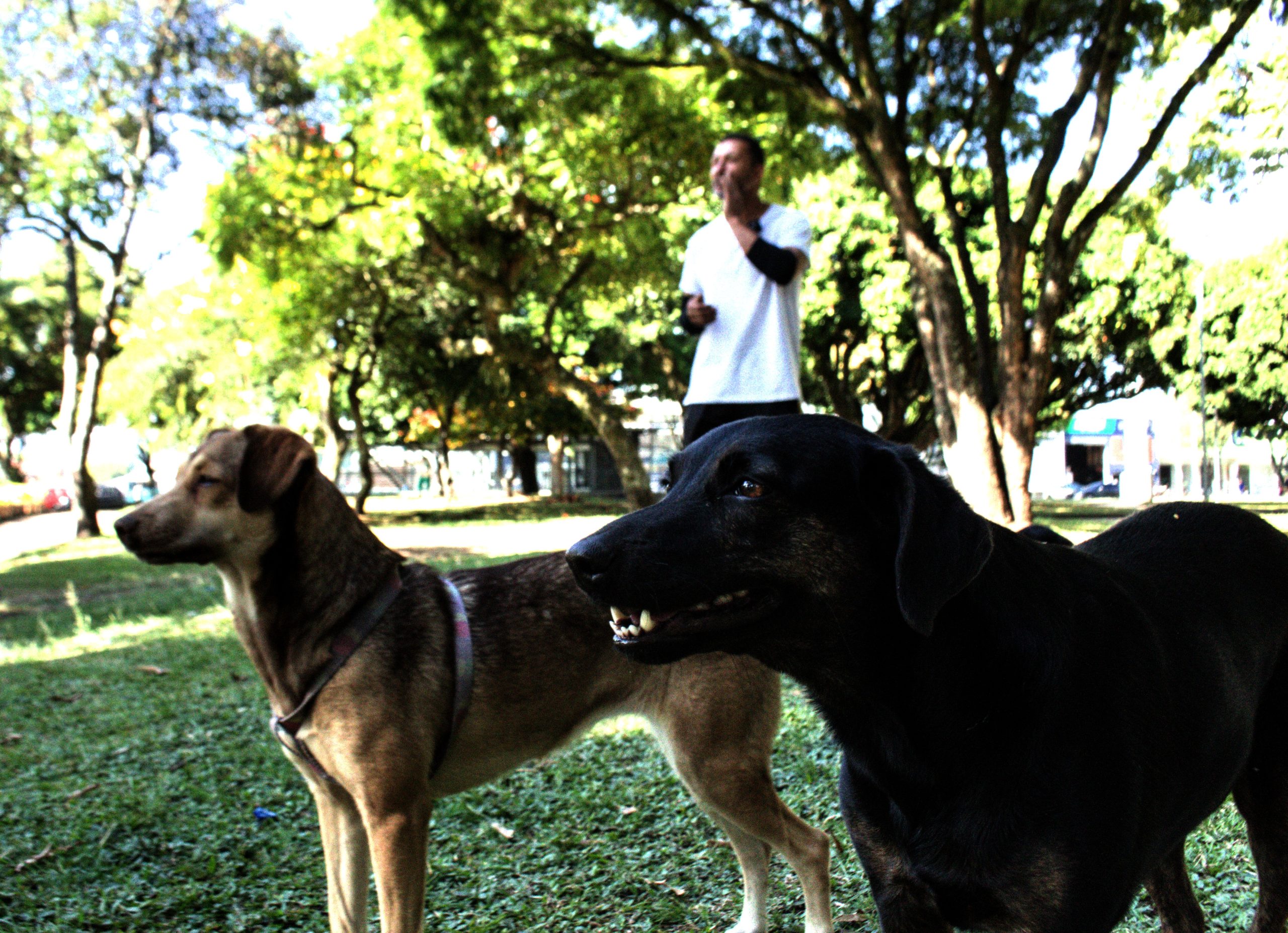
Mario Betancourt is a resident of Pereira, migrant who has returned from the United States, street vendor, and caretaker of five dogs he has rescued since 2021. He used to sell T-shirts, but he can’t anymore because many of the streets are still at risk of collapse. On top of that, the roof of his house caved in, and he is now among the displaced.
His daughters, as he calls his dogs, are called Celeste, Julieta, la Niña, la Negra, and Canela. All five are playful, their coats shining in the sun, alert to whatever Mario says as they run free in the park. Mario doesn’t know how to support his family of five rescued dogs, and the uncertainty weighs on him:
This is only the beginning. The economy has come to a halt and I live off what I sell in the street.
In response, he opened an Instagram account to sell his goods and keep caring for the family he chose to build.
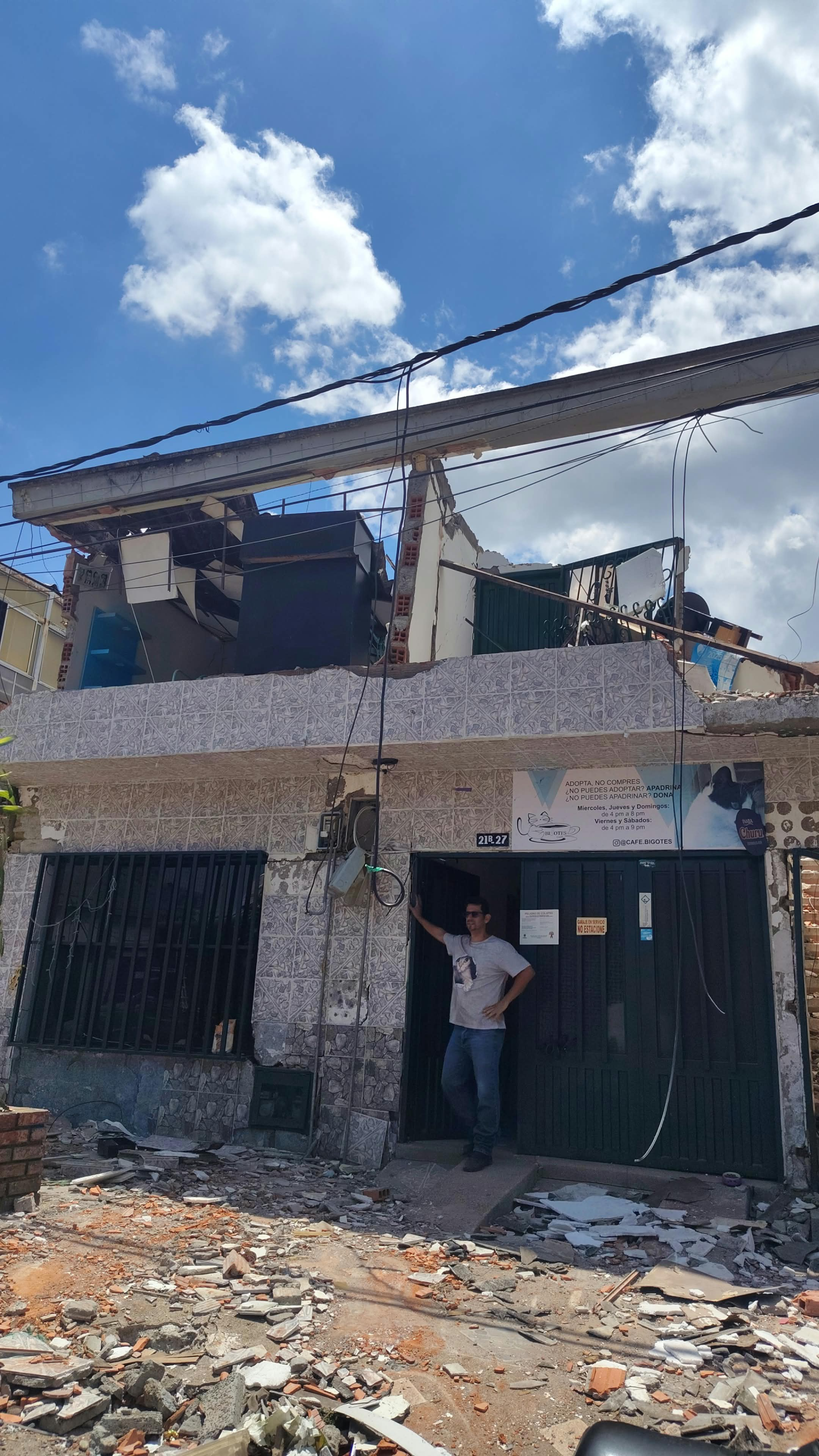
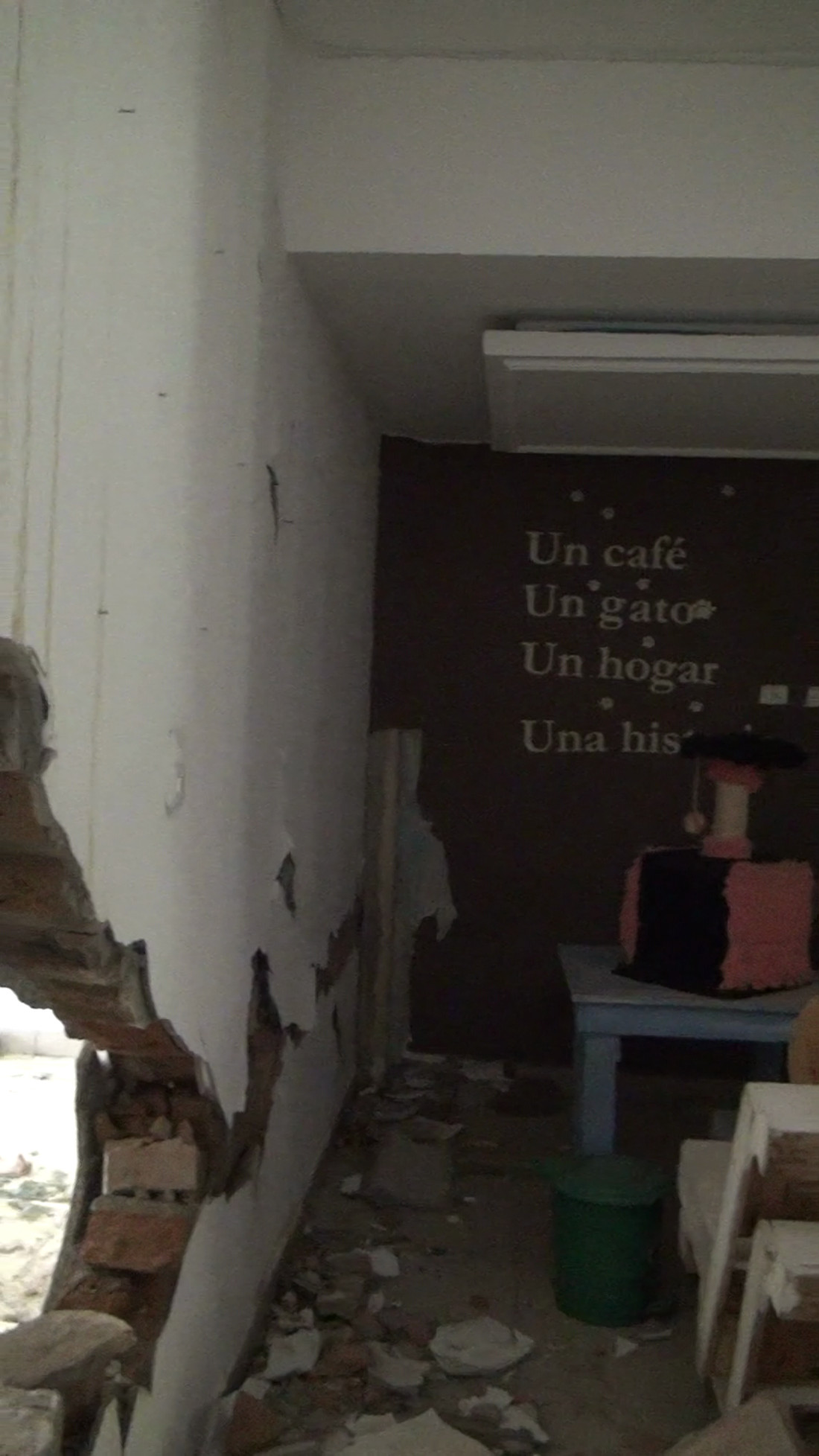
Mario isn’t the only one struggling to support rescued animals. Ricardo Cardona is the owner of Cafe Bigotes, the first mission-driven cat café in Colombia’s coffee region, Eje Cafetero. It’s a cage-free place that, in its owners words, has rescued “more than 1,500 animals” and has found homes for 482 cats.
The earthquake took the café’s physical structure, but not its cats. Ricardo pulled nearly all of them from the rubble, and amid the aftershocks, only one cat is still missing; he leaves food out for her. Neighbors have spotted her while guarding their properties against looters looking for opportunity in the debris.
Today Ricardo needs a house with space that’s comfortable for the cats, where he can set up his only source of income: a café. The money that Café Bigotes brings in is all that sustains his work with the animals.
Volunteering has its limits and costs for the people responding to this humanitarian emergency. Sustaining this work over time is only possible with solidarity and support from elsewhere. There is no reconstruction without solidarity for those providing support. Las Weras and the Intangible Museum are already doing their part to cook and provide food packages for hundreds of people. So is Agitart, in seeking to heal trauma through art, and so are Mario and Ricardo, in continuing to care for these animals they have chosen to protect.
The response from the city government and the department of Risaralda, and from Albelardo de la Espriella, have been denounced as insufficient and violent by several people we interviewed.
Violence as a Response to the Tragedy
In Pereira, the official statistics date from August 19 and come from the “Unified Command Post” of the mayor’s office. Since then, that data has stood as the official toll: 99 dead, 132 missing, and 259 injured. What’s certain is that we’ll never know how many people might have been saved or found. Abelardo de La Esriella’s decision to bar the entry of specialized search teams from countries not aligned with the far right delayed operations by three days, costing lives in every affected city.
Adding to that incomprehensible decision was the cruelty of ordering the rubble cleared and the cities’ economies restarted less than a week after the disaster.
For those who lived through the earthquake, these decisions were emotionally devastating. They witnessed potentially injured people go unrescued, and instead, be treated like rubble after August 14. So says María Cristina López Bolívar, a professor at the Universidad Technológica de Pereira (UTP), who saw places – where everyone knew people and bodies lay buried – turn into empty lots overnight. What happened to the bodies?
De La Espriella failed to grasp that an earthquake leaves both individual and collective trauma, and starkly violated the right to rescue and to mourn. In other countries that have suffered similar disasters (Venezuela, for instance) rescue teams spent weeks unearthing cadavers so that they could be sent home, helping to close the wound for those affected families and for society as a whole.
Beyond that, thousands of people who depended on businesses located on destroyed properties or on the informal economy lost their livelihoods. Hunger and unemployment add to the uncertainty, and the response, once again, has been violent. It shows how displaced people will be treated. In Pereira, between September 2 and 3, 30 families displaced by the earthquake who had been eating from a communal pot were evicted by the Dialogue and Order Maintenance Unit (UNDMO), accused of invading public space.
This is a politics that places violence above life. While more than 367 of Colombia’s 1,100 municipalities wait for aid and support to begin rebuilding, Abelardo de La Espriella has revived a policy of aerial bombing that has already killed several children. He has walked among corpses reveling in his “iron first” campaign against criminal organizations.
Rebuilding the affected cities and towns is a social process that demands solidarity, memory, and justice. To rebuild is not to clear the rubble and raise buildings; rather to guarantee dignified mourning and respond with empathy to the people and their needs. Rebuilding is a matter of the highest importance for Colombia, and will only be possible if it’s built transparently, alongside the people affected, and obviously with a real commitment to the lives and the dignity of those who lost everything.

In recognition of El Turbión’s commitment to integrity and excellence in journalism, the outlet has obtained the Certification of the Journalism Trust Initiative, promoted by Reporters Without Borders under the international standard CEN CWA 17493:2019.

Independent journalism and investigation are costly… Support us.
Si encuentras un error, selecciónalo y presiona Shift + Enter o Haz clic aquí. para informarnos.
About The Author

También te puede interesar
-
La solidaridad que sostiene a Pereira
-
«Cali quedó muy afectada, pero hay medio Cali que lo soporta»
-
Acabar con la Doctrina Donroe: América Latina puede resistir la extorsión de los cañones de Trump
-
Kamëntšá Women Defend the Amazon from the Copper Rush
-
Mujeres Kamëntšá defienden el amazonas de la fiebre del cobre