By Andrés Gómez
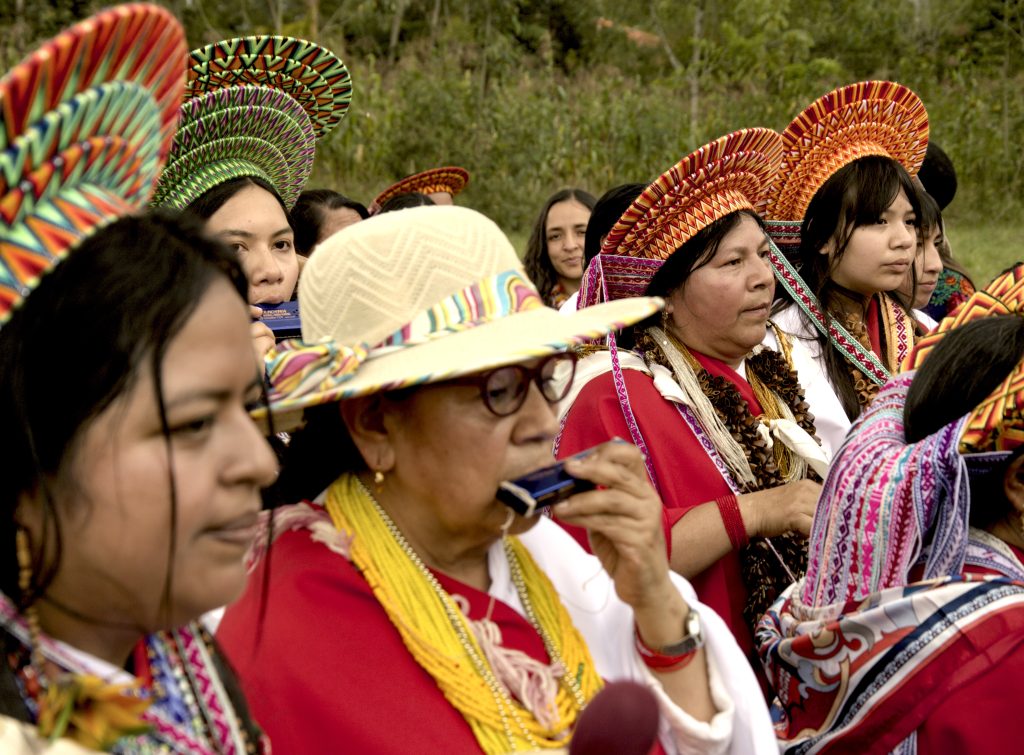
María del Rosario Chindoy had never heard of the mining concession FJT-141. Like many Kamëntsá women in Colombia’s Sibundoy Valley, she only realized something was changing when helicopters began flying over the mountains surrounding her territory. Seeking answers, the Women’s Council organized meetings and began asking local authorities what company was operating there. They found few answers. The copper mining project had been progressing for years without the communities’ knowledge; now the Council is trying to stop it.
For women, this is a grave threat because it destroys our territory and everything beneath our soil. As mothers on the council, our mission is to care for and protect this land.
Copper is essential to the energy transition, but demand is rising for its use in car manufacturing, which require three to four times more copper than gasoline-powered cars, as well as its use in the production of new weapons, and data centers. Combined with a lack of new mines and technical recycling challenges involved in recycling the mineral, this has caused market prices to soar, thereby increasing pressure on mining operations in regions such as the Colombian Amazon.
Libero Copper & Gold Corporation, a Canadian company that in 2025 changed its name to Copper Giant Resources Corp., plans to extract the red metal from the Amazonian department of Putumayo, exactly 10 km from Mocoa, the department’s capital, and in the surrounding mountains, but these mountains are no ordinary place.
The “Mocoa Project” is located in part of the Colombian Massif. This region of high biological richness encompasses the “Fluvial Star of Colombia,”a cluster of mountains between the departments of Cauca, Huila, Nariño, and Putumayo where five rivers originate: the Magdalena, Cauca, Caquetá, Putumayo, and Patía rivers. The Colombian Massif is also part of the “Andean Belt Biosphere Reserve,” an area recognized for its vital role in conserving biodiversity and regulating water. Functions that are essential to the biosphere reserves supported by UNESCO.
The copper mining project has been moving forward slowly for more than two decades in Putumayo, and although it has faced resistance in Mocoa, it has not met with the same reaction in the Upper Putumayo, despite two indigenous reserves overlapping with the mining titles: Condagua, the reserve of the Inga people, and the Kamentša Biyá reserve of the Kamentša people.
For members of the Kamëntšá Women’s Council, the problem has never been only the mine itself, but the lack of information surrounding it. They say municipal authorities, Indigenous authorities and the company have failed to explain how the project could affect their territory. That uncertainty has fueled mistrust and prompted the council to organize discussions, territorial walks and community meetings to understand what is happening.
The threat is the decline of our cultures, says council member María del Rosario Chindoy.
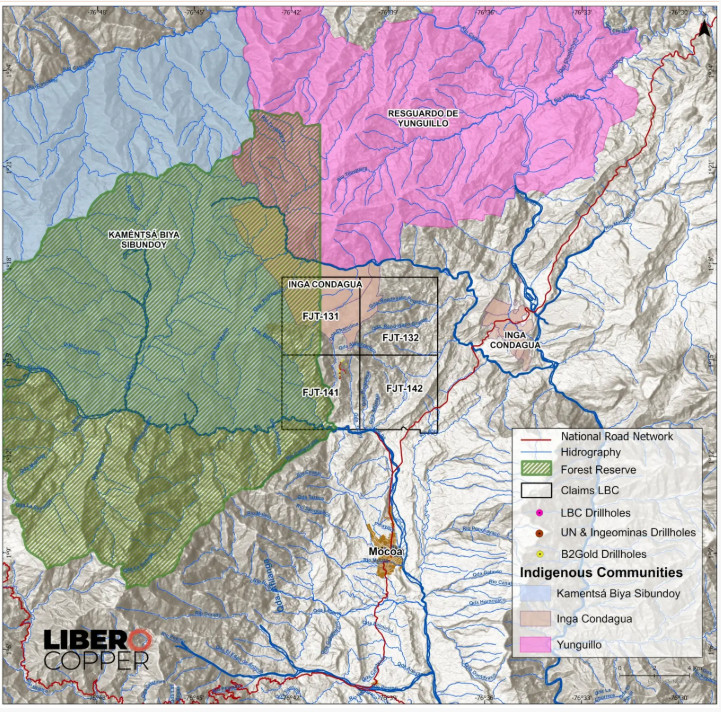
This is no small matter. In the mountains around the Sibundoy Valley, Libero Cobre operates in the so called FJT-141 mining block. This area is part of both indigenous reserves and forest reserve. The company also plans to work in its three other nearby mining blocks: FJT-131, FJT-132, and FJT-142.
The blocks overlap with many environmentally sensitive areas. These include the Upper Mocoa River Basin Forest Reserve, wetlands, the Remaining Natural Forests, Forests at Risk of Deforestation, the Doña Juana Complex páramos, Protected Forest Areas, and Water Protection Zones. They all serve as habitat for thousands of species, protect water and mitigate the impacts of climate change.
Mining Concessions in Times of War
The Sibundoy Valley sits among mountains in the Amazonian foothills. Former FARC-EP guerrillas used this area as a key route. This path connected southeastern Nariño to Lower Putumayo’s lowland rainforests. The Truth Commission (CEV) documented that the Inga and Kamëntša peoples suffered forced lockdowns, murders, armed combat, forced disappearances, and displacements in the Valley.
Amid the counterinsurgency war led by Álvaro Uribe Vélez(2002 – 2010), Anglo Gold Ashanti (AGA) acquired six mining concessions in 2004, which Mocoa Ventures Ltd. took over in 2009. During the Santos’ Mining Locomotive initiative, Mocoa Ventures carried out 12 drillings in the area, and in 2018 sold the concessions to the Canadian multinational Libero Cobre Ltd., which has since owned the mining titles: FJT-131, FJT-132, FJT-141, and FJT-142. The four titles cover 7,830 hectares and are located in the municipality of Mocoa, 10 kilometers from the city.
The concessions, however, were granted without consulting the communities in the Condagua and Kamëntšá Biyá reserves.
The Inter-American Commission on Human Rights has noted that the lack of prior consultation is one of the central factors in conflicts between extractive projects and Indigenous communities, especially when significant profits are at stake. And this is the case with Libero Cobre Ltd. a company which claims that the “Mocoa Project” has 232,000 tonnes of molybdenum and 2.1 million tonnes of copper:
Mocoa is home to one of the largest undeveloped copper-molybdenum deposits in the Americas, with significant additional exploration potential. The deposit remains open in multiple directions, and recent drilling has identified new high-grade zones.
At current market prices, the Mocoa project promoted by Libero Cobre represents a massive economic stake. The reported molybdenum reserves alone has a gross in-situ value of $14 billion. This estimate relies on benchmark prices of $50,000 to $60,000 per ton, as stated by the U.S. Geological Survey (USGS), in December 2025.
Following the ownership of the Mocoa Project is not straightforward. A 2023 review of corporate records shows that Libero Copper’s ownership structure extended beyond Canada and included companies incorporated in the British Virgin Islands under the control of the influential U.S. Sununu family:
Sununu’s politically connected, climate change-denying father, John H. Sununu, and brother, Michael Sununu, are more than just investors in Libero Copper & Gold. Michael is a board member of Libero, and he and his father sit on the board of the company’s largest shareholder, Anglo Asian Mining PLC, which operates in Azerbaijan.
A Mining Project Beyond Control
The presence of Libero Cobre raised concerns for the Mocoa City Council. In response, they approved Resolution 020 of December 6, 2018. This resolution prohibits medium- and large-scale mining in the municipality, but the National Mining Agency (ANM) challenged Resolution 020. The agency argued it did not follow the Constitutional Court’s Ruling SU-095 from 2018 that states that surface and subsoil are State property. However, Mocoa’s Administrative Courts denied the claim. The courts concluded that:
Municipalities may prohibit mining and energy activities within their territories in the exercise of their powers to protect the environment and regulate land use.
Despite the court’s ruling, Libero Cobre announced in October 2021 that exploration work had begun:
Boots on the ground exploration work at Mocoa has officially begun.
The company’s expansion also coincided with questions about its relationship with public institutions.
In 2021, Libero Copper not only began work without a permit, but also partnered with the Faculty of Mining at the National University of Medellín, with both parties signing an agreement to explore the deposit and train students, but Giovanny Franco, who served as Deputy Minister of Mines from October 2022 to 2 March 2023, was also a lecturer at the faculty and met with the company to promote the project whilst he was supposed to be overseeing it. Due to the obvious conflict of interest, Franco resigned following accusations from members of parliament and civil society organisations.
Commencing work without authorisation has led to a chain of unauthorised actions which, however, do not result in effective sanctions. In March 2022, Corpoamazonía inspected camps and drilling sites due to a breach of Mocoa Resolution 020. They found that Libero Cobre hired Kluane, a Canadian firm, to handle drilling waste, but Libero Cobre had no records of the waste management process. They also discovered that Libero Cobre had cleared 5,000 square meters of land and built infrastructure without permits. Due to these issues, Corpoamazonía ruled that the company:
Cannot carry out any activity related to mineral exploration and exploitation within the jurisdiction of Mocoa …(and) must immediately suspend any activity it is currently conducting.
Yet documents obtained by El Turbión through freedom of information requests show that the National Mining Agency (ANM) itself later acknowledged Corpoamazonía’s warnings regarding “the possible development of activities” by Libero Cobre during suspension periods affecting the concessions FJT-131, FJT-132, FJT-141 and FJT-142.
The same documents reveal that, in the case of the FJT-131 concession, ANM inspectors “verified the presence of mining activities within the contract area” while the suspension remained in force. However, instead of sanctioning the company, the National Mining Agency accepted Libero Cobre’s request to lift the suspension, arguing that “the essential element of irresistible force majeure no longer existed.”
In late 2022, the Inga Council of Condagua filed a protection writ. They challenged the Ministry of the Interior and Libero Cobre. The council sought prior consultation on copper mining in Block FJT 131. While the Ministry of the Interior reviewed this petition, the Council of State annulled Agreement 020 in 2024. This judicial decision lifted the mining ban that the agreement had put in place.
Copper advances despite institutional gaps
After the annulment of Agreement 020 in 2024, Mocoa faced legal and territorial uncertainty. Meanwhile, Libero Copper moved forward with the Mocoa project. During that year, they launched a 14,000-meter drilling program and announced cadastral adjustments. According to the company, these changes removed overlaps with forest reserve areas. However, the adjustments announced by the company have not been verified by Corpoamazonía, which maintains that the concessions continue to affect protected areas.
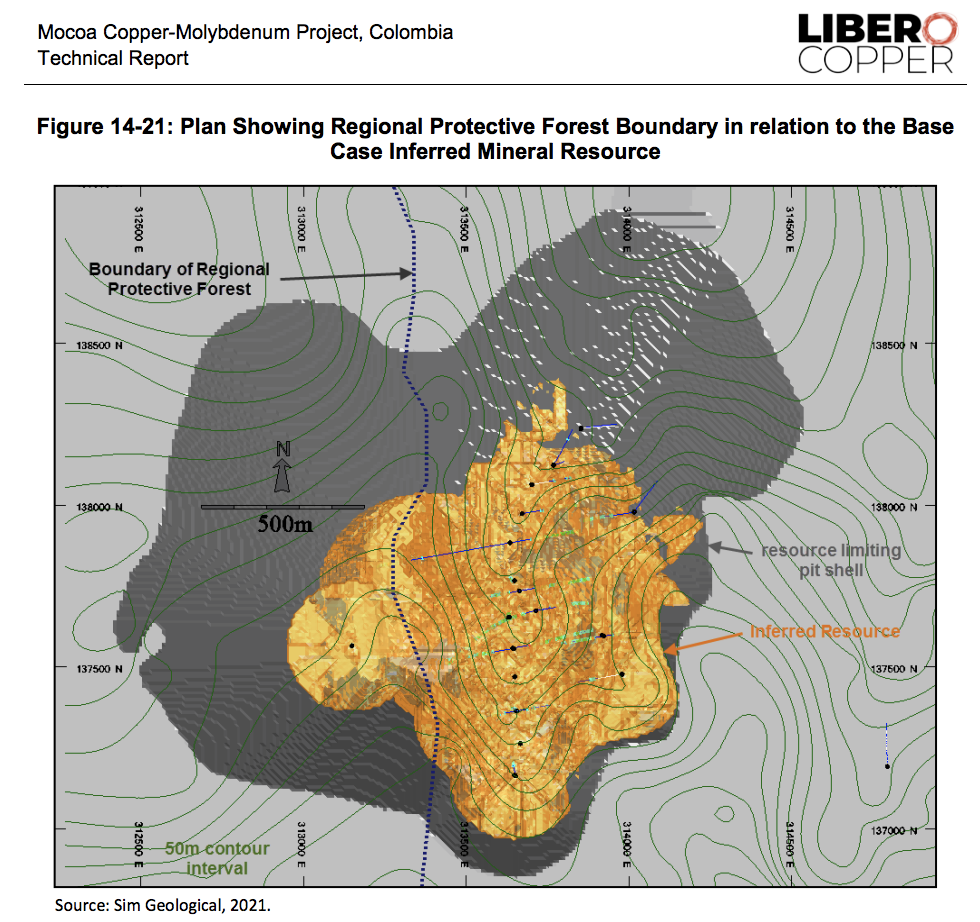
But the same freedom of information documents reveal deeper institutional failures. The National Mining Agency (ANM) admitted that “no records of meetings with Corpoamazonía prior to the signing of the concession contracts” exist because “the ANM was not the mining authority” at the time. The agency also stated that determining whether Indigenous consultation was required “is the exclusive responsibility of the Ministry of the Interior.”
However, another official response obtained by El Turbión from the Ministry admitted that “no prior consultation processes” involving the Kamëntsá Biyá and Inga de Santiago peoples had been registered regarding mining projects in their territory. The authority only confirmed consultation-related processes involving the Condagua reserve and Libero Cobre’s FJT-131 concession.
In 2025, the Ministry of the Interior, the Mocoa Mayor’s Office, Corpoamazonía, and the National Mining Agency held 10 official sessions and 10 forums with the Inga de Condagua Council. On September 20, they finalized the agreements that allow the mining company to operate under the FJT 131 title, even though this area includes part of the Kamentša Biyá reserve.
The same year, the company intensified operations. The drilling pace increased, a second drill was deployed, and the project’s scope expanded. Results confirmed the deposit is a large-scale deposit, and the company announced that a third drill would be deployed by 2026.
Continuing violations
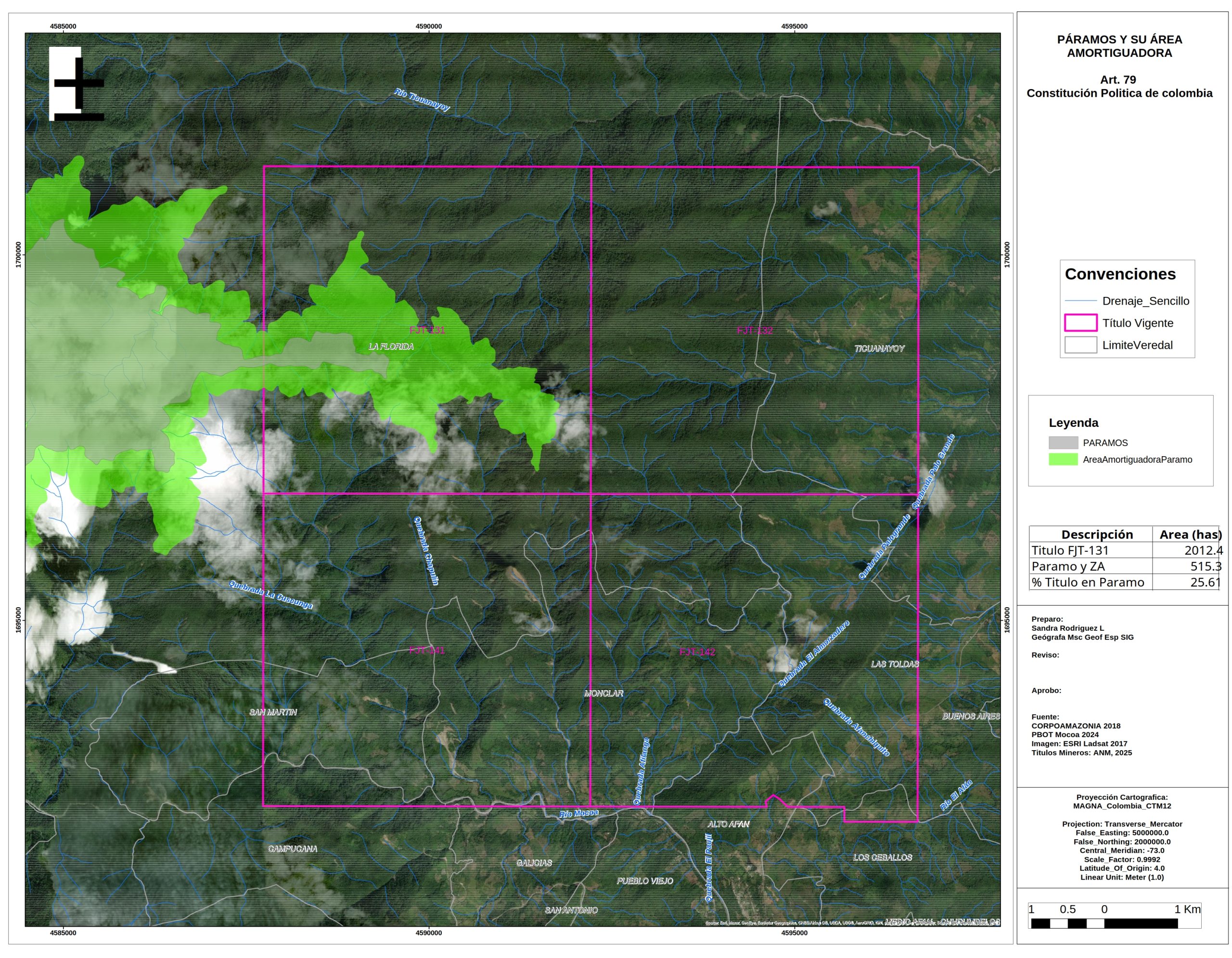
Once again, the company is acting in violation of established regulations. Resolution DG No. 0631 of June 10, 2025, issued by Corpoamazonía, the FJT-131 concession currently in operation, along with the other three concessions in the construction and assembly phases, must suspend operations.
At the same time, the Ministry of Environment admitted that the process to integrate environmentally protected areas into the national mining cadastre “is still underway.” Meanwhile, according to the Mayor’s Office of Mocoa, the project area is classified in the municipality’s Land Use Plan as “Rural C – Absolute Protection Zone,” whose purpose is to “guarantee the permanence of water sources and the preservation of forest cover.” Yet the National Mining Agency (ANM) argued that “it is not the responsibility of the Mining Authority to carry out an analysis of territorial compatibility.”
Sandra Torres, a former Corpoamaazonía official, says Libero Cobre often escapes consequences. She blames this on negligence by public servants at the National Mining Agency.
Libero Cobre is drilling and operating despite its license being suspended by the National Mining Agency. The National Mining Agency was informed, but it turned a blind eye showing total indifference. This demonstrates repeated inaction.
Today, Libero Cobre continues to pursue its goal: to develop the project. The Sununu family seems to anticipate this could be a lucrative opportunity. The International Energy Agency says that the shift to new energy sources will increase copper demand by 50% by 2040.
Libero Cobre’s work proceeds without restriction due to state agencies’ failure to enforce the law. Yet, the State is aware of the potential damage this inaction may cause. The Environmental Licensing Agency (ANLA) recognizes that the villages of Campucana, San Antonio, Montclar, and Pueblo Viejo are located within Libero Cobre’s mining concession and near Condagua and Kamëntšá indigenous reserves.
ANLA also acknowledges that these communities “maintain cultural and practical ties to this area” and that the region “regulates water cycles” through fragile high-Andean and sub-Andean ecosystems. Yet despite these warnings, the project continues advancing in one of the territories most vulnerable to landslides, floods and climate disruption in the Colombian Amazon.
However, a council of Kamëntšá women is determined to stop the environmental damage.
Women in the Path of Libero Cobre
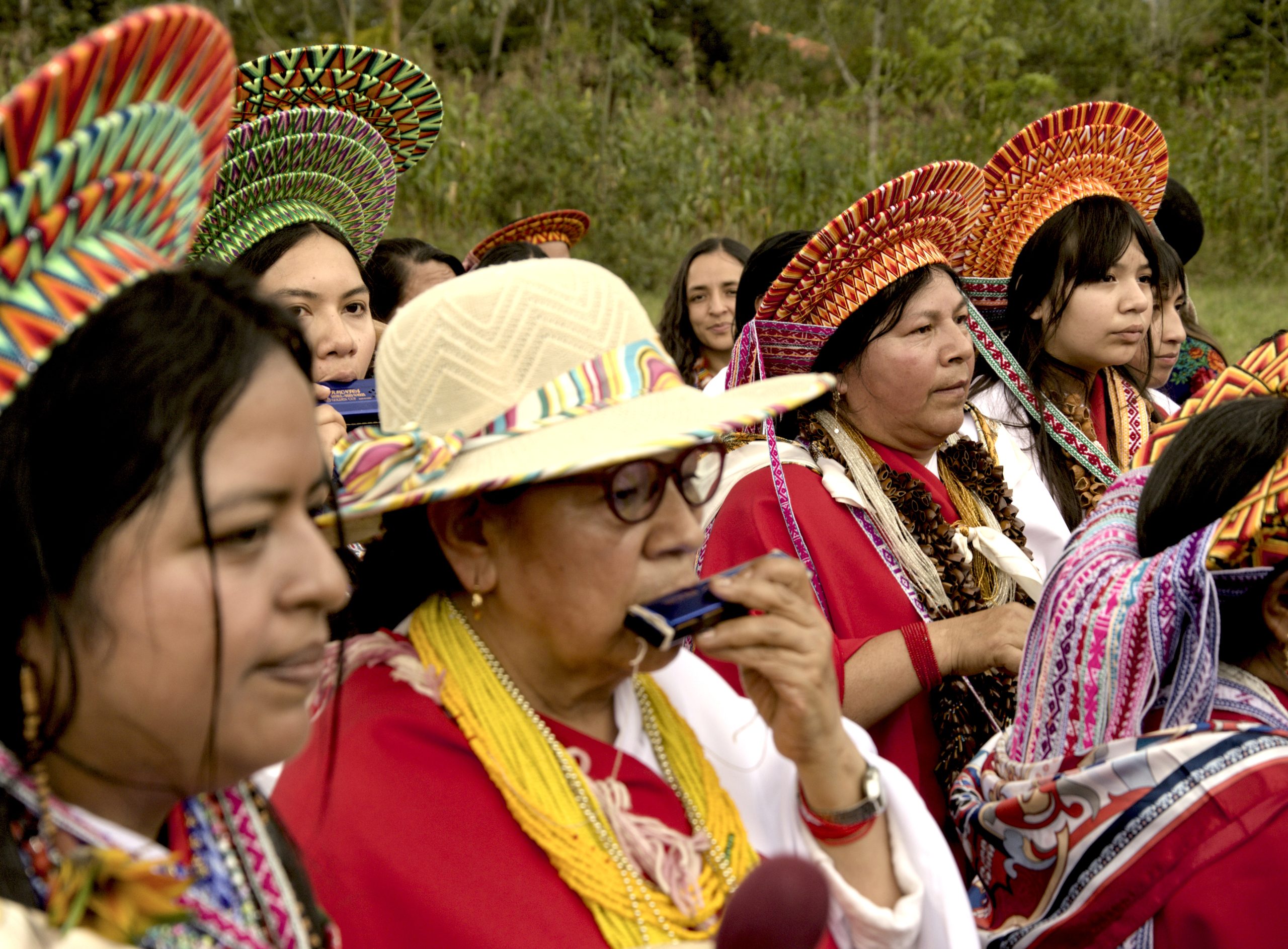
When María del Rosario learnt of the copper mining taking place near her community, she and the Women’s Council organised a response and set up ‘circles of the word’ and ‘mingas’ for reflection and collective work. Both Kamëntšá and non-Kamëntšá people from the Valley came together to share their views. These participants began to question the mindset behind development and its promises.
Mayra Alejandra Chindoy, María del Rosario’s niece, says that as a result of these forums, they have come to understand how fleeting these promises are:
They say they can bring education, a bridge, stores, or new jobs. But that’s only temporary, Mayra explained.
Twelve women lead the council. By urging others to care for the environment, they have become a strong feminine force within their reservation.
We feel very satisfied. Bringing together 200, 300, or even 400 women is a real achievement.” We invited the elders to share, and many responded, “That’s interesting, keep going, we’ll join you too.” Their support has been a great source of strength for us. They’re with us; we can count on them.
Many of the Councilwomen’s activities have centered on Libero Cobre (now Copper Giant). El Turbión first learned of their concerns regarding the mining company through our partner, Fundación Bitácora Ciudadana . This organization met with the Councilwomen and shared the group’s story with us to ensure their voices were heard.
Despite their interest, these women did not know that mining blocks FJT 141 and part of FJT 131 were on their territory. They were also unaware of other blocks or that the neighboring Condagua Reservation had yielded to the company’s demands for the FJT 131 block in 2025.The Kamentsá women noticed Copper Giant’s presence when helicopters began flying over their mountains.
Unsure of what was happening, they decided to visit the nearest moorland, and El Turbión accompanied them. The plan was to walk through the territory, share knowledge across generations while gathering edible plants and medicinal herbs, and discuss the company’s local impact. As we climbed into the páramo, another threat became evident—one that goes beyond mining: the effects of the climate crisis.
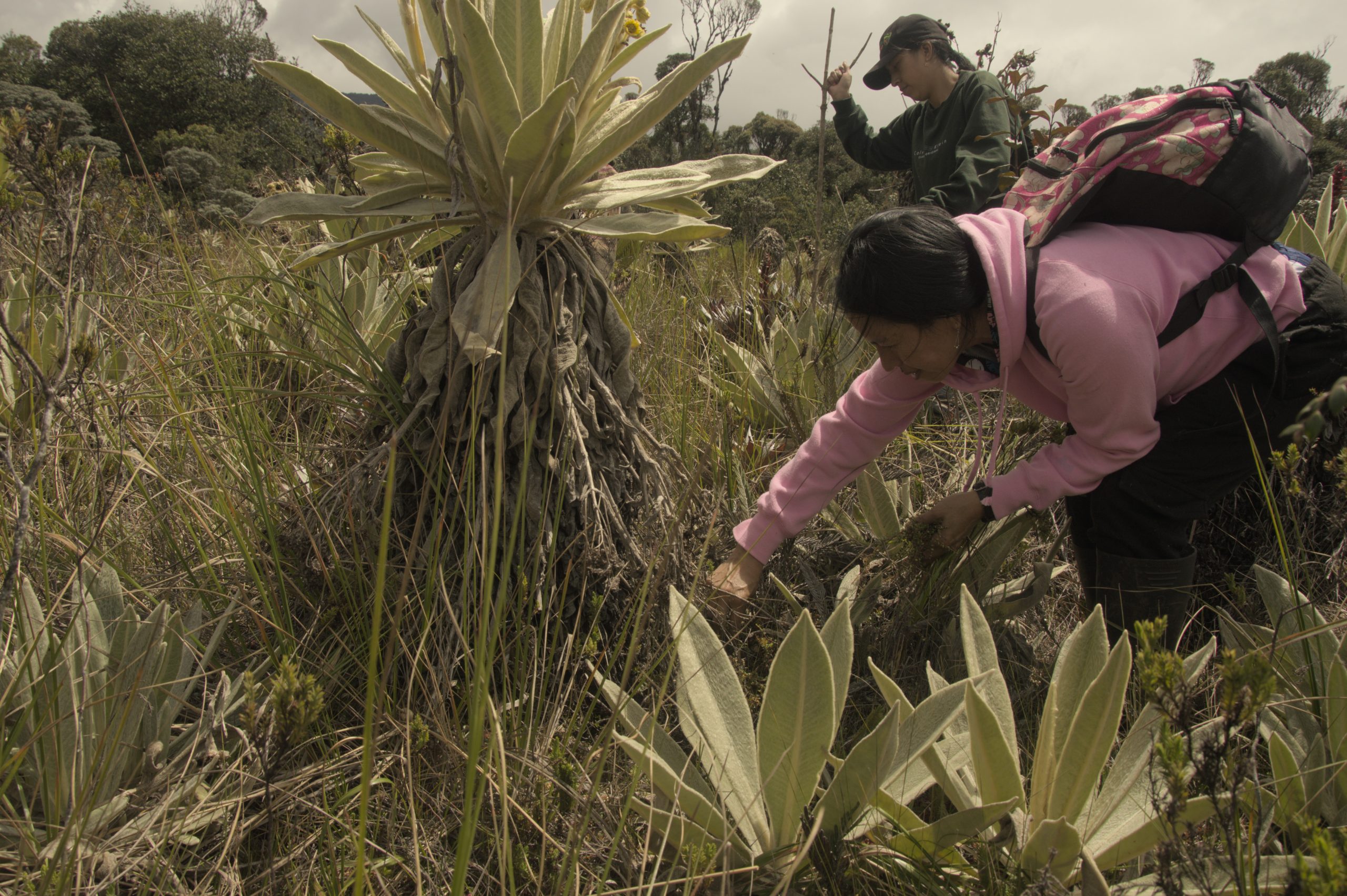
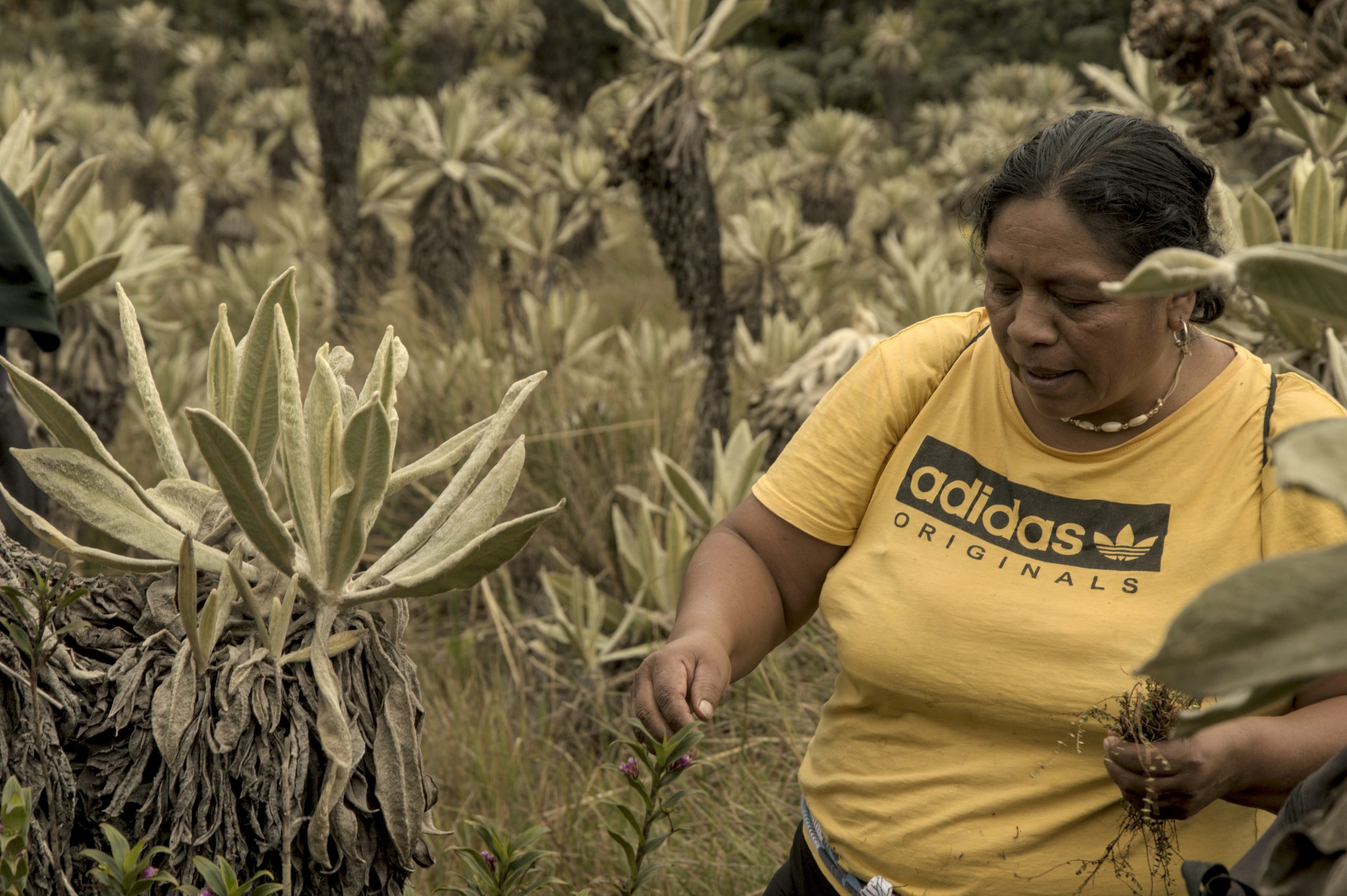
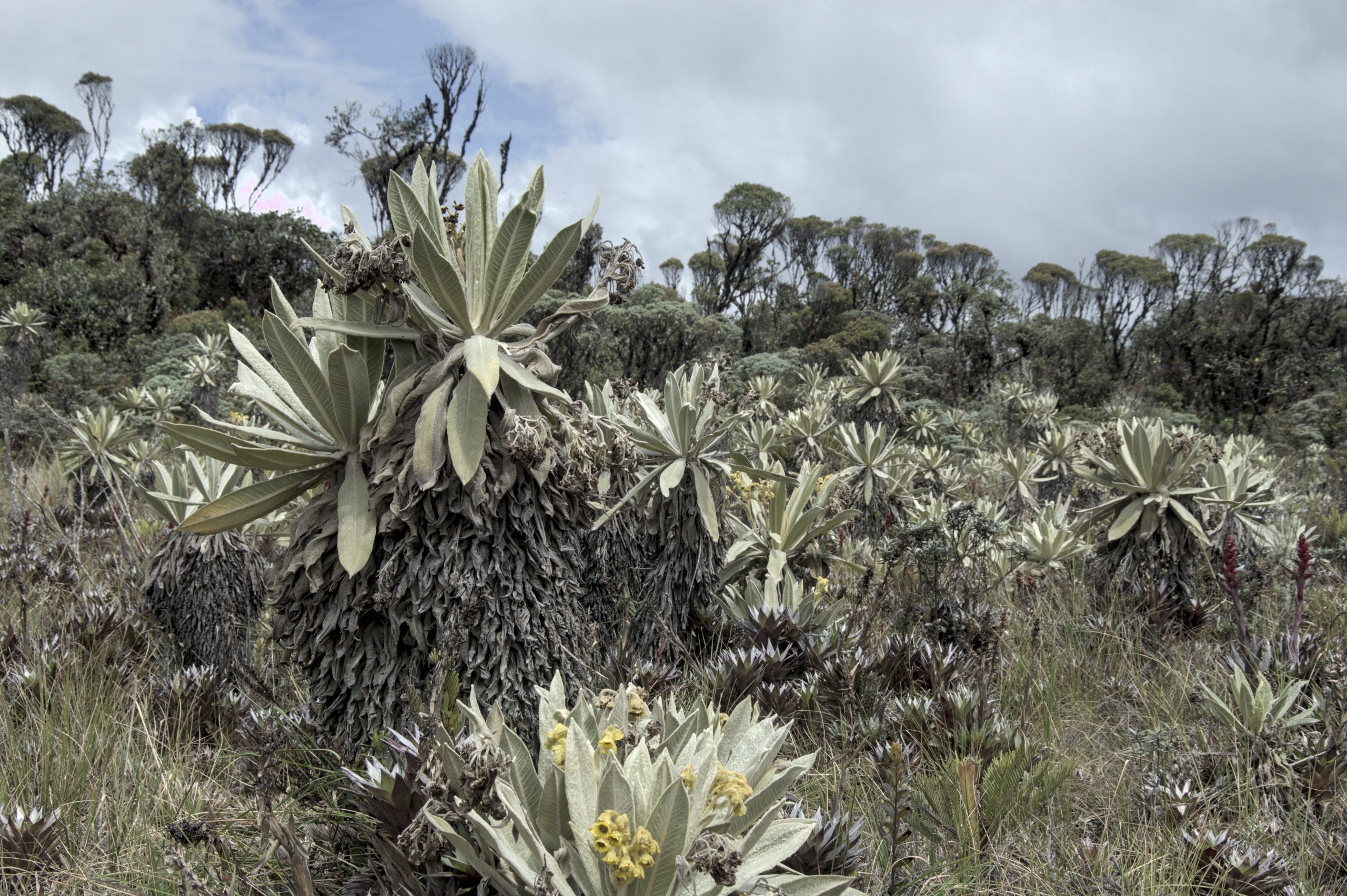
The Upper Putumayo is one of the rainiest places on Earth, but its waters are already changing. This páramo ecosystem depends on the frailejones, plants endemic to Colombia, Ecuador and Venezuela, which grow just one centimetre a year. These delicate plants absorb moisture from the mist and act as water factories by channelling water into the ground, feeding springs and water sources that nourish the streams flowing into the River Mocoa, part of the Caquetá River basin which flows through the Amazon.
Eight years ago, we used to walk on a watery cushion, and we’d end up completely soaked!” But look at it today, with the few days of summer we’ve had, and the ground is dry. Well, yes, there are small patches that still have a little mud, but that’s about it. Before, we would get completely soaked.
Luisa Chindoy’s words, spoken in the forest among the frailejones, reveal her fear that the páramo will degrade, and that Libero Cobre will intensify that degradation.
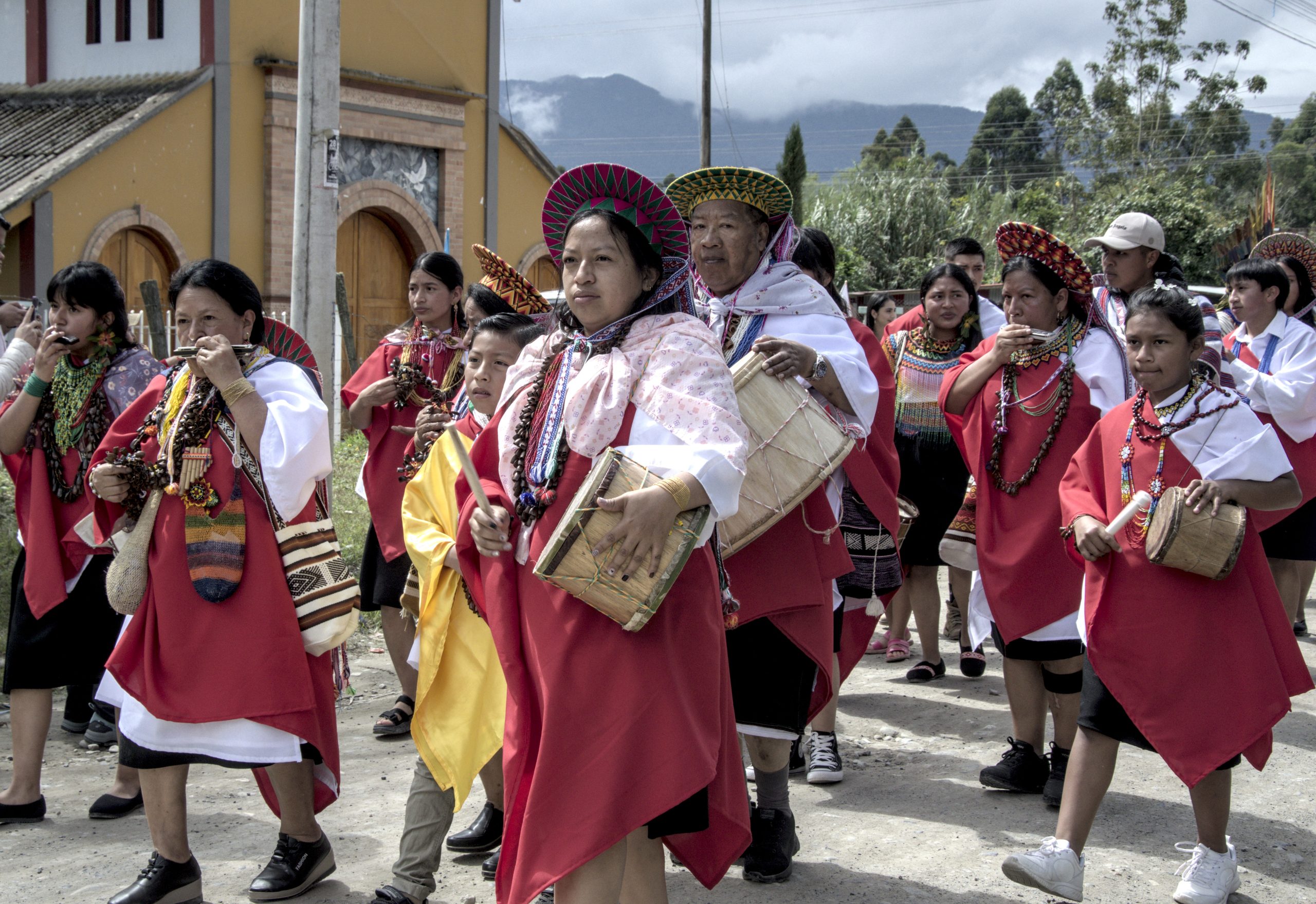
But environmental change is not the only concern. Libero Cobre has sought to shape local perceptions through cultural events and symbolic gestures. Miguel, a young indigenous guard, explained that the multinational co-opts the community’s events and sacred dates for its own promotion. This includes the «Clestrinye,» a celebration that is part of the day known as the Bëtsknaté: Great Day or Day of Forgiveness, shared by the Kamentsá and Ingas.
And what hurts me the most about this multinational is that a year ago, on the eve of ‘Clestrinye,’ they went around giving away drums to anyone who wanted one, but with the Libero Cobre logo on them. So it’s like they’re gradually making it clear—in quotes—that it’s good, that it’s going to bring development, but development only for the moment.
“Green transition” at the risk of a catastrophe?
Libero Cobre activities do not seem consistent with a company focused on a clean and sustainable energy transition. Its dealings with indigenous communities have been opaque and disregard the regulations of environmental agencies. Whilst the mining company owned by the Sunnunu family had initially planned an open-pit mine, now, it insists it can conduct underground mining with less environmental impact. But underground mining still has major safety risks in the Andean-Amazonian foothills of Putumayo. The Mocoa River basin is known for its powerful torrents and steep, deep canyons. Sandra Rodríguez, a geologist and former Corpoamazonía contractor, confirms this assessment.
The water source there is young, and furthermore, it is still dynamic and has great force. The narrow canyon increases its speed and power.
Sandra Rodríguez is not exaggerating. Data from the Institute of Hydrology, Meteorology, and Environmental Studies and the Colombian Geological Service, as cited by Corpoamazonía, show that 80% of Mocoa faces a high or very high risk of landslides, flash floods, and floodings. Since 1998, Mocoa has recorded over 80 disasters. Most of these disasters are linked to geomorphological and hydrological processes.
The underground exploration and mining proposed by Libero Copper could make this situation worse.
Corpoamazonía says mining concessions for the “Mocoa Project” are in areas prone to mass movements. These risks exist alongside flash floods from heavy rains that trigger mudslides and sediment runoff. Both types of disasters have happened several times in the region. Sandra Rodríguez fears Libero Cobre’s operations will harm local communities and believes this damage has already begun.
There have already been events that occurred last year on this little stream that affected Pueblo Viejo here. They destroyed a bridge that connects Montclar, San Antonio, and Pueblo Viejo. A small amount of mud was enough to destroy this bridge. I can’t even imagine what it would be like with more rocks and sediment falling into the stream.
The danger is not limited to the communities threatened by rockslides and mudslides. Copper miners also face the threat of mine collapse. Sandra Rodríguez explains:
I would even go so far as to say that 70% to 80% of all accidents inside the mine are due to collapses. Consider the Marmato case in Caldas, where collapses happen constantly. The key difference is that Marmato is located in a forest area that is almost dry. The rainfall there is less than 10% of what we get here in this Amazonian region. Yet collapses still occur frequently.
A transition that demands a State that cares
The energy transition is advancing, but without effective technologies to recycle electronic waste, the demand for copper will continue pushing mining deeper into territories such as Putumayo. In Mocoa, this does not only mean extracting a mineral. It means intervening in páramos, forests and water systems that sustain Indigenous communities and regulate life across the Andean-Amazonian foothills.
The Kamëntsá women know this well. In response, not only they organize mingas, discussions and territorial walks. They collect seeds, monitor springs and try to defend the territory before the damage becomes irreversible. Their actions also reveal something deeper than opposition to mining.
In a region torn apart by war, displacement and institutional opacity, the Women’s Council is striving to uphold collective forms of territorial stewardship and communal decision-making that the State has never guaranteed. Whilst the authorities have fragmented responsibility amongst the agencies responsible for mining, the environment and prior consultation, the women are organising themselves to learn about the issue, holding assemblies to share what they have learnt, walking the páramo and bringing together elders and young people to discuss what is at stake.
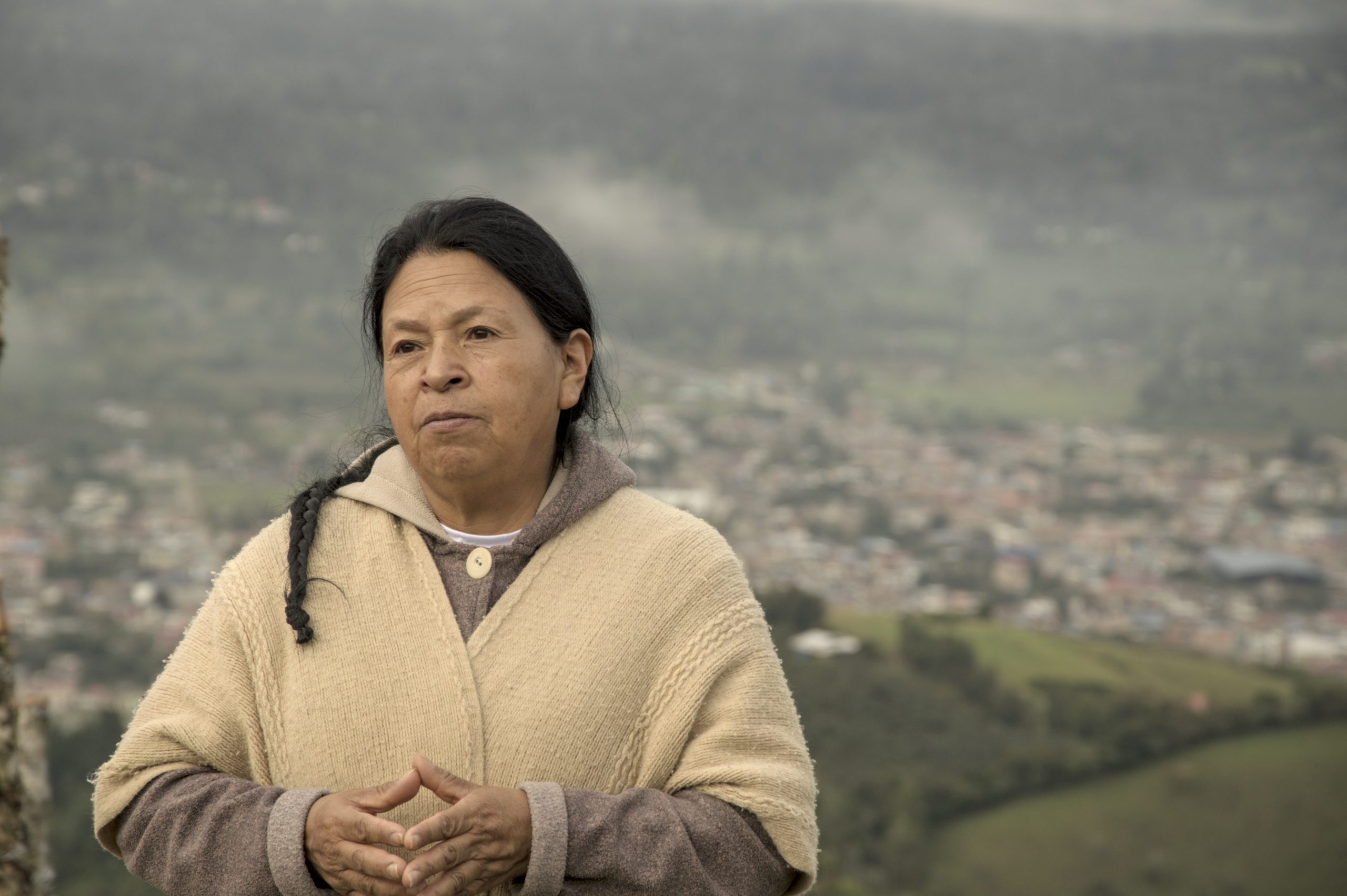
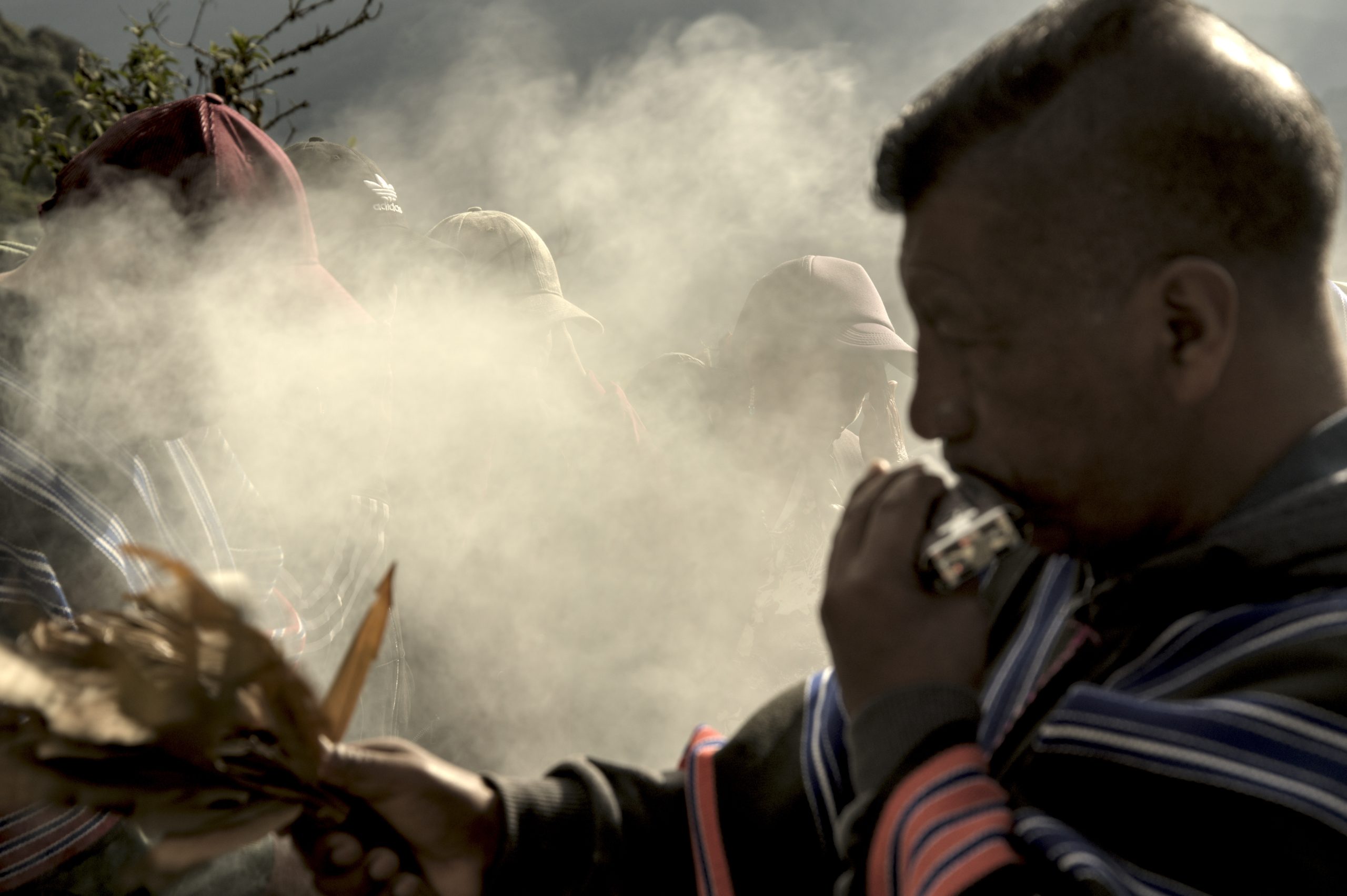
The conflict is not just about the copper deposits beneath the mountains, but about who has the authority to determine the future of the territory itself. And on this point, Rosario Chindoy calls on her people to be prudent:
Money comes, as the saying goes, but money runs out and the fool is left behind. What good is it to us if our authorities bring in vast amounts of money? Resources and programmes may arrive, but if we are losing our essence, if we are not thinking like Kamëntšá, if we are not feeling like Kamëntšá… then what use is the money?
* El Turbión submitted a formal request for information to Copper Giant Resources Corp. (formerly Libero Copper), enquiring about the overlap of its mining concessions with indigenous reserves and forest reserves, as well as its failure to comply with a suspension order issued by Corpoamazonía; however, the company never replied.
In recognition of El Turbión’s commitment to integrity and excellence in journalism, the outlet has obtained the Certification of the Journalism Trust Initiative, promoted by Reporters Without Borders under the international standard CEN CWA 17493:2019.

Independent journalism and investigation are costly… Support us.
Si encuentras un error, selecciónalo y presiona Shift + Enter o Haz clic aquí. para informarnos.
About The Author
